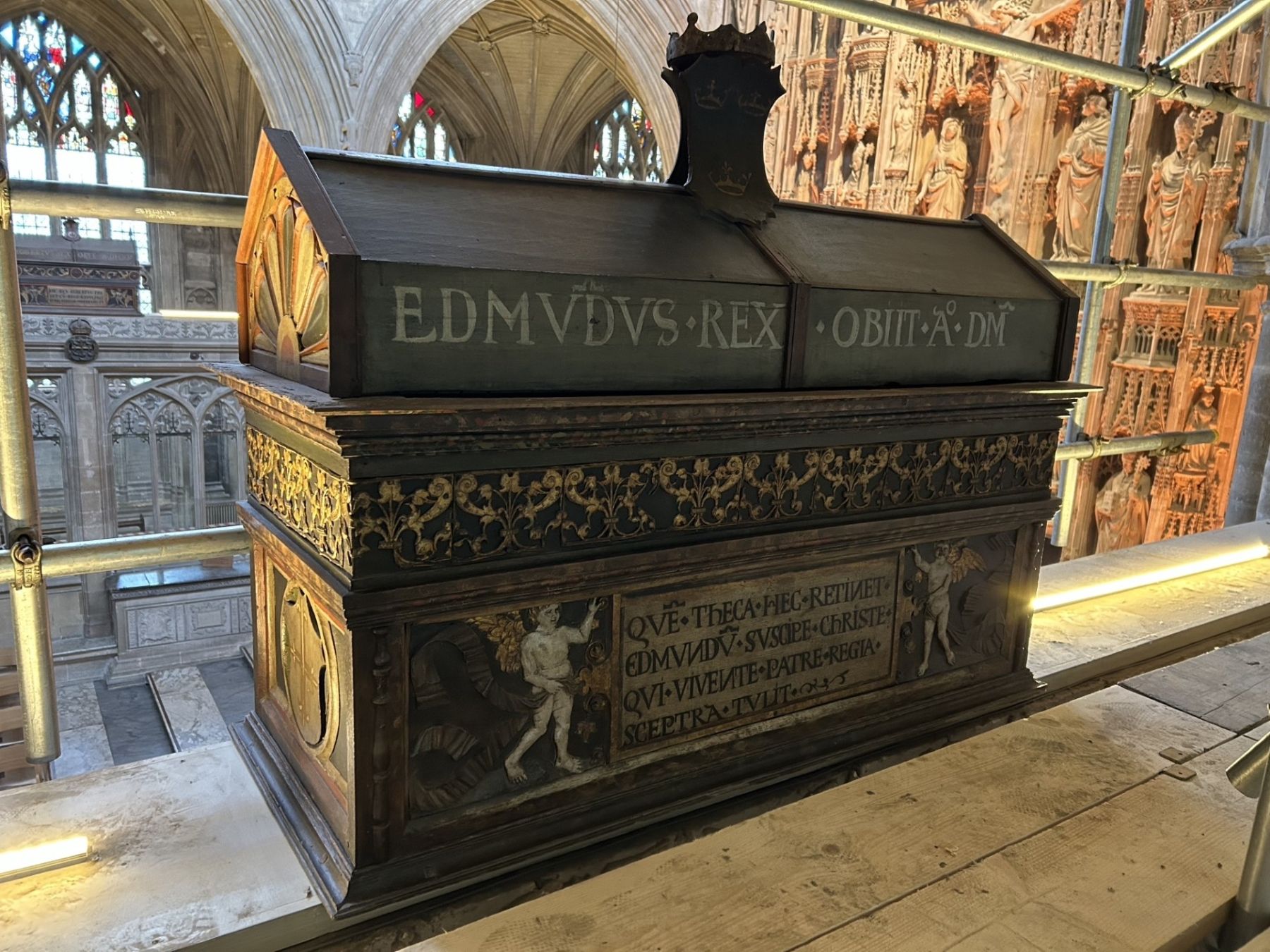
The bones of medieval kings and bishops have been reinterred in six mortuary chests in Winchester Cathedral after more than a decade of painstaking forensic work to piece together the jumbled remains.
Begun in 2012, the Mortuary Chests Project has involved the expertise of an array of specialist academics, conservators, staff and volunteers to repair the chaos created within the caskets when they were broken open during the English Civil War (1642).
Individual skeletons have been re-assembled, using osteological techniques and DNA analysis.
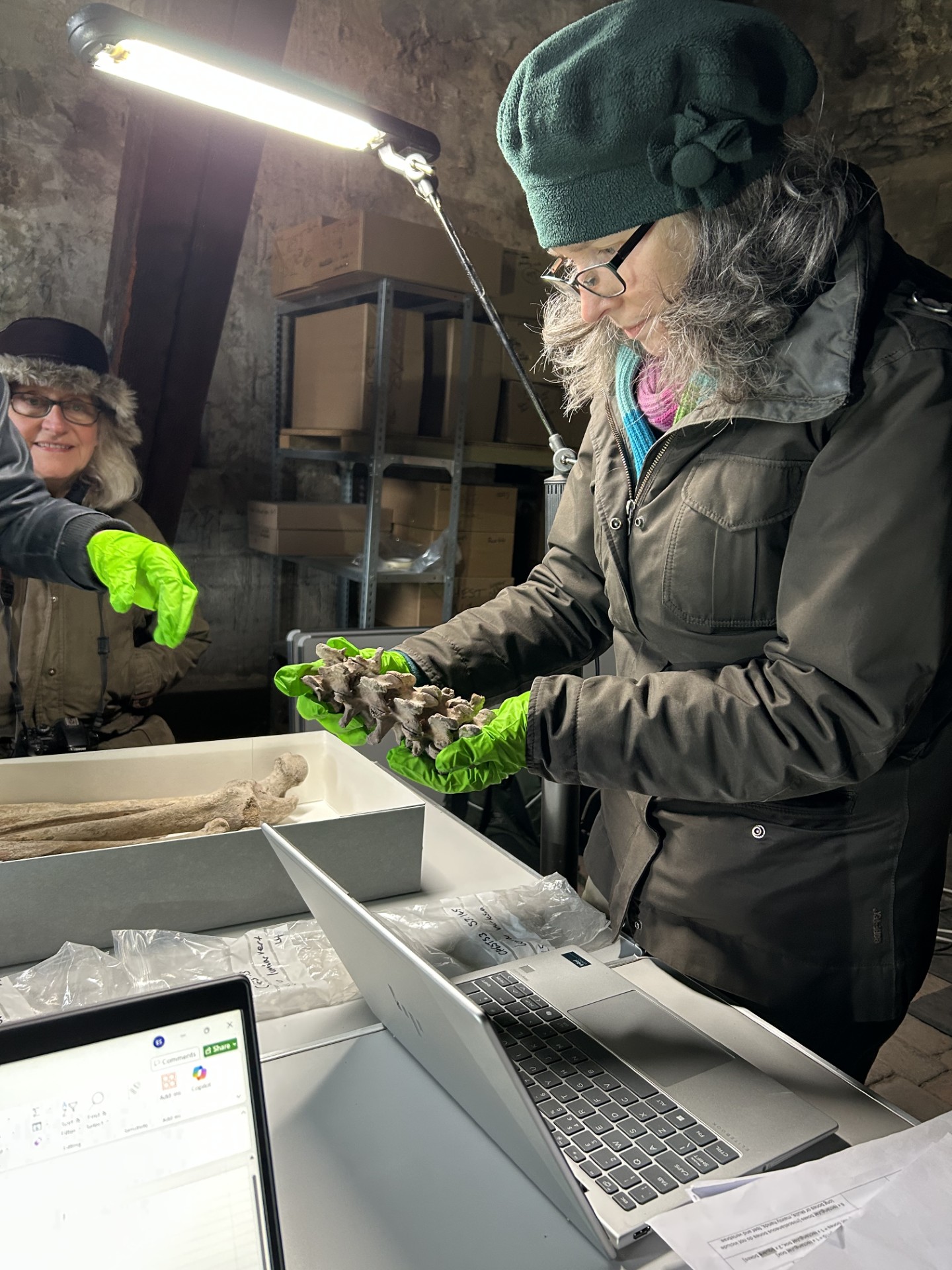
Dr Heidi Dawson-Hobbis, Senior Lecturer in Biological Anthropology at the University of Winchester, and Cathedral Curator Eleanor Swire have been carefully re-boxing the remains with a team of University students and graduates and cathedral volunteers.
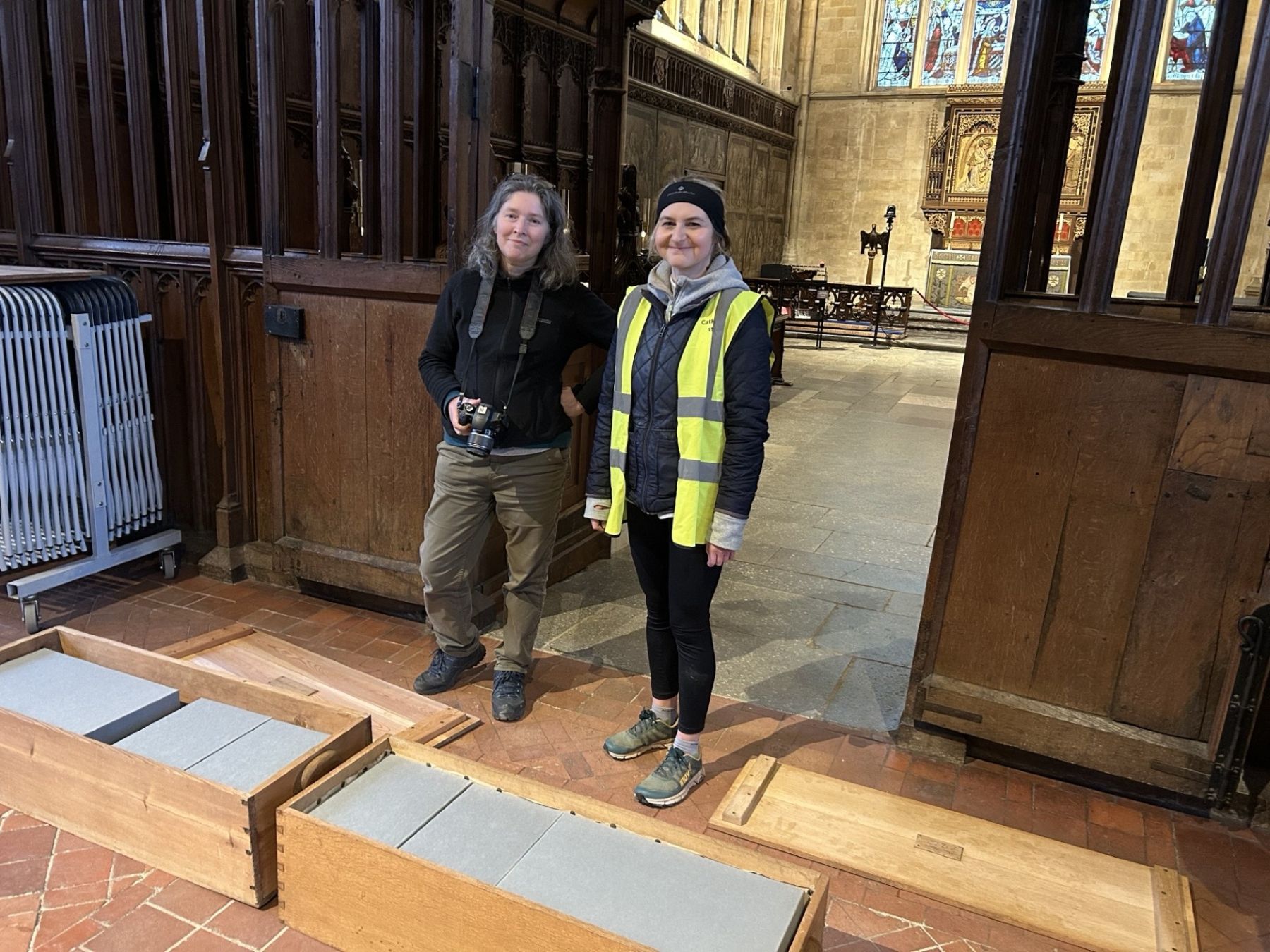
Dr Heidi Dawson-Hobbis, Senior Lecturer in Biological Anthropology at the University of Winchester, and Cathedral Curator Eleanor Swire with some of the wooden internal bone boxes
A detailed record of the exact placement of every bone has been made and photos taken at each step so researchers of the future will know exactly which bones are in each box within each chest.
Radiocarbon dating was used to ensure individuals from similar periods were interred together within the same chest.
The bones pre-date the mortuary chests and can be traced to the seventh to twelfth centuries.
It is thought many of the bones were buried first in the Anglo-Saxon Old Minster, which stood on a site adjacent to the present cathedral.
Among the famous names given in Latin on the sides of the six chests are William Rufus (William II of England, son of William Conqueror), Cnut (the first Danish King of England) and Queen Emma - a remarkable Norman noblewoman who became Queen of England twice, as the wife of King Æthelred the Unready then Cnut the Great, and was mother to a pair of kings - Harthacnut and Edward the Confessor.
Others named on the chests are Cynegils, Cynewulf, Ecgbert, Æthelwulf, Eadred, Edmund, Bishop Wine and Bishop Alwine.
It is also likely that the chests contain remains of other early medieval figures.
The project’s findings on the likely identities of the skeletons are expected to be made public later this year.
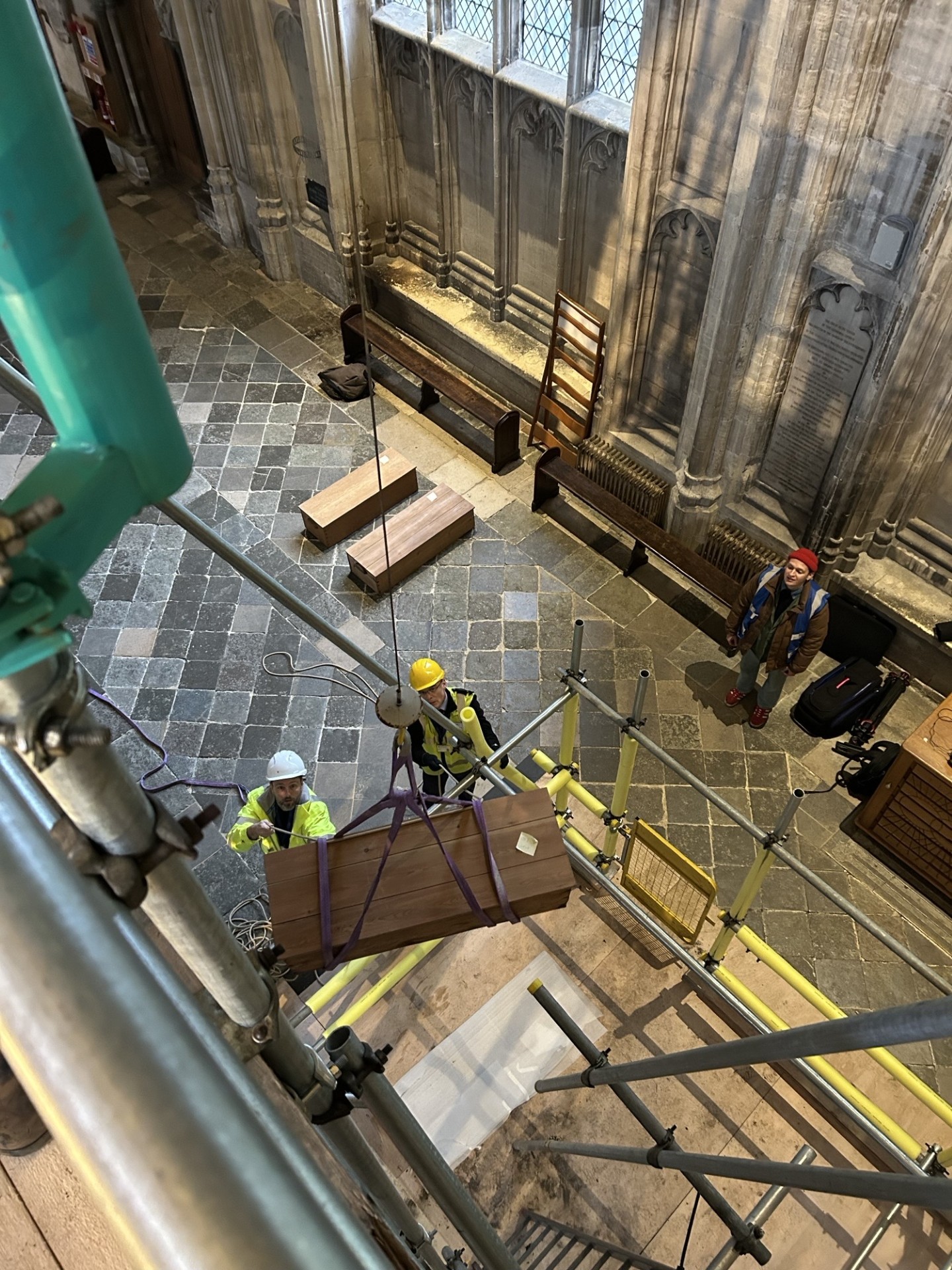
During an 11-day period in January the wooden inner boxes were hoisted more than seven metres back up to the presbytery screen walls and replaced in the decorated chests which date from the 16th and 17th centuries.
The mortuary chests vary in size but are approximately 145cm long by 60cm wide and 60cm deep.
The cathedral is also to commission the construction of two further chests for the remains of nine, as yet unidentified, individuals of “ongoing scientific interest”.
Eleanor Swire says: “This project demonstrates the combined power of science, the study of human remains and historical research to discover new information about the six mortuary chests and their occupants which would not have been available to us a generation ago.”
 Skeleton key
Dr Dawson-Hobbis has worked on the project since the start as the humans remains specialist.
Her task was to 'excavate' and record all of the material from the six chests, and then to try and re-associate each bone to create individual skeletons using osteological and forensic techniques.
These findings prior to 2019 were used as part of the Kings & Scribes exhibition at the Cathedral, which Heidi and others on the mortuary chests board, including Prof. Barbara Yorke (Emeritus Professor at Winchester), helped to design.
Since the restart of the project post-Covid she has been collaborating with numerous researchers on various scientific sampling strategies and regarding the other non-human material from the chests.
Heidi said: “'It is really special to see these remains returned to their resting place within the mortuary chests knowing that we now have a full inventory of their contents. This information will be held within an archive at the Cathedral and we hope to publish the full results over the next year or so. We currently await the final results from a DNA and isotopic studies."
A student volunteer from Winchester’s BA (Hons) Anthropology and Archaeology undertook a placement to aid in photographing the collection, along with volunteer graduates and students from Anthropology and Archaeology.
Heidi organises visits with foundation year students and Level 6 Anthropology/Archaeology students to the Cathedral to discuss the project and uses her research experiences in teaching on various modules.
Back to media centre