Sports Therapy
B180This dynamic degree prepares you for a career in the growing field of Sports Therapy. It will enable you to develop into an independent practitioner with the skills and abilities to work in diverse environments (e.g., healthcare, sporting, military, practice-based). You will work to empower athletes and patients of all abilities to reach their potential with the aim being to rehabilitate people back to “optimum levels of functional, occupational and sports specific fitness, regardless of age or ability” (Society for Sports Therapists [Online], 2024]). Our aim is to shape confident learners who have the skills needed to excel in their studies and be workforce ready.

Course overview
Become a Skilled and Confident Sports Therapy Professional Our BSc (Hons) Sports Therapy degree is designed to develop you into an independent, critical, and highly skilled practitioner. Guided by expert staff, you’ll gradually build your knowledge, practical abilities, and clinical confidence throughout the course – preparing you to thrive in this exciting and fast-evolving profession.
You’ll study the underpinning theory of sport and exercise science and learn how to apply it in practice to prevent, assess, and treat injuries across a wide range of settings – from elite athletes to recreational participants.
Practical Learning at the Heart of the Course
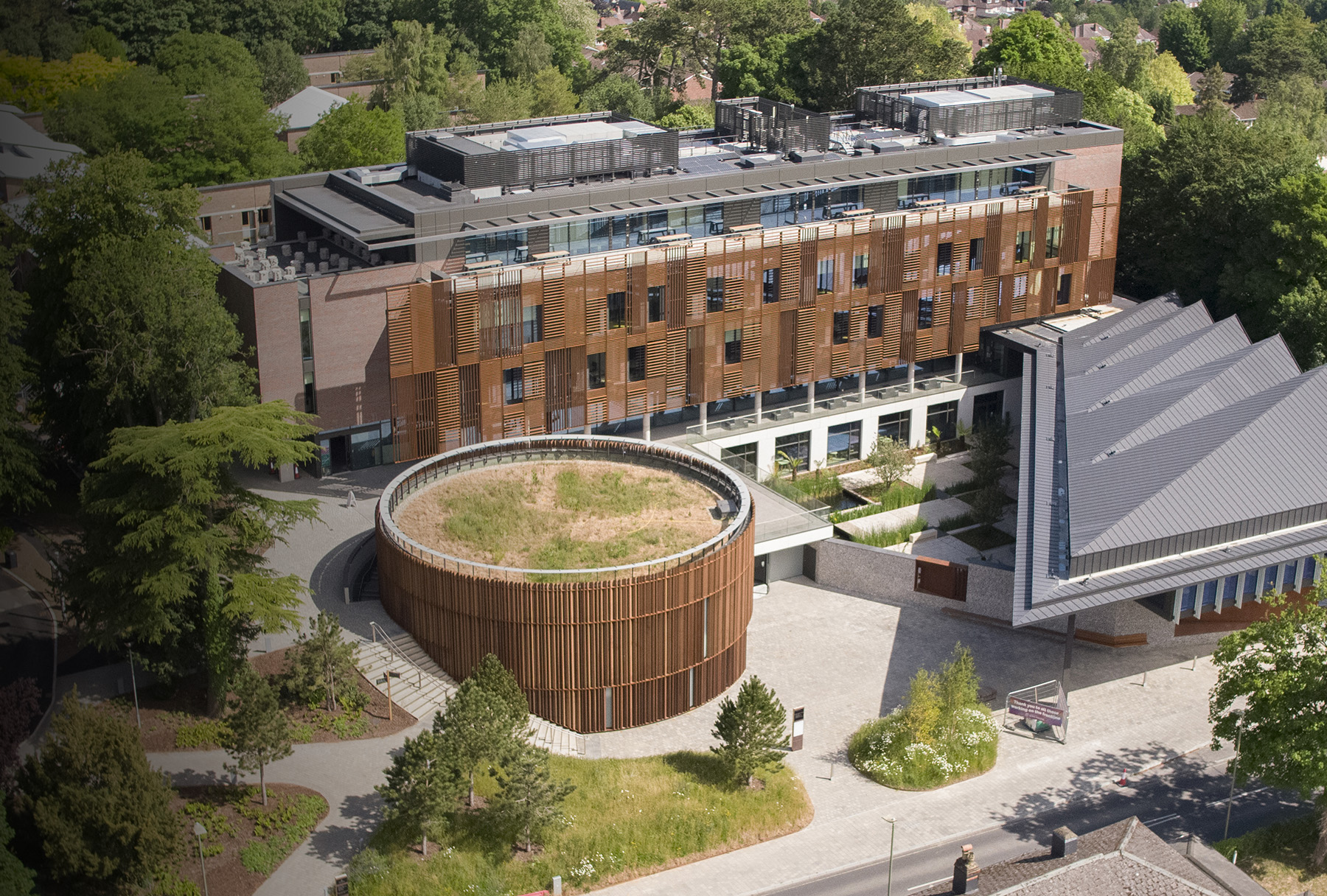
Due to its strong emphasis on hands-on learning and evidence-based practice, this programme blends scientific theory with real-world application. Practical Learning at the Heart of the Course Based at our King Alfred and West Downs Quarters you’ll benefit from access to state-of-the-art sports and exercise facilities, including specialist labs in biomechanics, physiology, and psychology.
Our dedicated Sports Therapy teaching spaces support a wide range of practical sessions, including soft tissue therapy, injury rehabilitation, and emergency first aid for sport. Throughout your degree, you'll engage in placements with sports clubs, therapy clinics and community organisations, gaining invaluable experience in real clinical and sporting environments.
A minimum of 250 hours of professional placement in your third year ensures you are career-ready and confident.
What You’ll Learn
As you progress, you’ll build key competencies in:
- Injury prevention, assessment, treatment, and rehabilitation
- Immediate care and basic life support in competitive, training, and occupational settings
- Soft tissue and manual therapy techniques
- Designing and delivering rehabilitation and return-to-play/work programmes
- Using sport and exercise science to optimise performance and physical health
- Designing and undertaking your own research, helping you to engage critically with contemporary developments in Sports Therapy and build your scientific expertise

How You’ll Be Taught
Learning takes place through a blend of lectures, seminars, and interactive practical workshops. Small group teaching enables rich discussion and deeper understanding, while independent study, personal academic tutors and academic support services help you succeed across all areas of your degree.
Interprofessional learning is embedded into the programme, with opportunities to collaborate with students from physiotherapy, nursing, dietetics, and other sport-related degrees – reflecting the realities of working in multidisciplinary health and performance teams.
Professional Accreditation and Opportunities
On successful completion of your degree, you’ll be eligible to apply for full graduate membership of the Society of Sports Therapists (SST). As a student member, you’ll have access to:
- The British Journal of Sports Medicine (online)
- SST seminars, the Annual General Meeting, and events
- Exclusive job and volunteering opportunities on the SST members' portal
Our on-campus library also provides extensive physical and digital resources, giving you access to a wide range of academic journals and specialist literature in sport, exercise and rehabilitation.
What you need to know
Course start date
September
Location
Winchester campus
Course length
- 3 years full-time
Apply
B180
Typical offer
112-120 points
Fees
From £9,790 pa
Why Winchester
- Accredited by the Society of Sport Therapists (SST), this programme delivers a nationally recognised, high-quality qualification aligned with professional standards.
- Be taught by expert staff and learn from leading national and international Sports Therapy professionals and researchers
- Practical learning in a range of industry-standard spaces (e.g., clinical treatment rooms, tailored rehabilitation space, teaching gym, specialised labs)
- Develop the skills to deliver complete athlete care—covering everything from injury prevention to hands-on treatment and tailored rehabilitation strategies.
- Gain invaluable practical experience through 250 hours of work placement. This might include sports teams, private clinics and the NHS.
- Advance your learning through collaborating with other healthcare and sports disciplines.
Course details
Our aim is to shape 'confident learners' by enabling you to develop the skills needed to excel in your studies and in the workplace
You are taught primarily through a combination of lectures, workshops and practical classes, which ensures that you can transfer your learning and understanding in practical ways.
In addition to the formally scheduled contact time such as lectures and practical sessions you are encouraged to access academic support from staff within the course team and the wide range of services available to you within the University.
Independent learning
Over the duration of your course, you will progressively build knowledge, understanding and practical and applied skills to ensure you are prepared to practice as competent, safe and autonomous practitioners. While you will be supported throughout your course, you will also be expected to develop as independent and critical learners, to problem-solve and to progressively build confidence and expertise through independent and collaborative research.
Overall workload
Your overall workload consists of class contact hours, independent learning and assessment activity.
The following information gives an indication of how much time you will need to allocate to different activities at each level of the course.
Year 1 (Level 4): Timetabled teaching and learning activity*
Teaching, learning and assessment: 288 hours
Independent learning: 912 hours
Year 2 (Level 5): Timetabled teaching and learning activity*
Teaching, learning and assessment: 288 hours
Independent learning: 912 hours
Year 3 (Level 6): Timetabled teaching and learning activity*
Teaching, learning and assessment: 228 hours
Independent learning: 720 hours
Placement: 252 hours
*Please note these are indicative hours for the course.
Location
Taught elements of the course take place on campus in Winchester.
Assessment
Our validated courses may adopt a range of means of assessing your learning. An indicative, and not necessarily comprehensive, list of assessment types you might encounter includes practical exams, practical skills assessments, written assignments (e.g., essays, reports), oral presentations and written exams.
We ensure all students have an equal opportunity to achieve module learning outcomes. As such, where appropriate and necessary (and ensuring adherence to PSRB regulations), students with recognised disabilities may have alternative assignments set that continue to test how successfully they have met the module's learning outcomes. Further details on assessment types used on the course you are interested in can be found on the course page, by attending an Open Day or Open Evening, or contacting our teaching staff.
Percentage of the course assessed by coursework
Year 1 (Level 4)*:
20% coursework
18% written exams
62% practical assessment
Year 2 (Level 5)*:
35% coursework
0% written exams
65% practical assessment
Year 3 (Level 6)*:
63% coursework
6% written exams
31% practical assessment
*Please note these are indicative percentages and modes for the programme.
Feedback
We are committed to providing timely and appropriate formal and informal feedback on your academic progress and achievement to enable you to reflect on your progress and plan your academic and skills development effectively.
Further information
For more information about our regulations for this course, please see our Academic Regulations, Policies and Procedures.
Modules
Please note the modules listed are correct at the time of publishing. The University cannot guarantee the availability of all modules listed and modules may be subject to change. The University will notify applicants of any changes made to the core modules listed. For further information please refer to winchester.ac.uk/termsandconditions
Modules
Students will explore human anatomy with specific reference to function and movement. Students will learn key terminology relating to the muscular system, skeletal system and nervous system and how these structures function and relate to movement. The module will include a practical element to put anatomy into practice by identifying and locating bony landmarks as well as different soft tissue structures and how to test them. Students will also gain a basic yet broad grounding in key physiological systems that underpin sport and exercise performance. Students undertaking this module will extend their basic knowledge of physiology and will gain the foundation of knowledge required for sport and exercise physiology-based modules at levels five and six.
The aim of this module is to introduce and develop students’ skills and knowledge to conduct objective clinical assessments. Objective assessments are essential in screening for pathologies and students will develop their assessment skills to interpret assessment findings. Students will start to develop their subjective assessment skills in line with their level of study to interpret findings in conjunction with the objective assessment outcomes. They will formulate working hypotheses for common basic sporting and exercise injuries using an evidence-based framework. Students will also consider professional communication used in Sports Therapy practice to ensure appropriate patient- centred care, making sure all legal aspects including informed consent are included in their professional practice.
The aim of this module is to introduce students to the generic healing processes of soft tissue injuries and how to manage these in the acute phase. Students will explore the phases of healing and the soft tissue interventions that can be applied at each phase. Students will also be trained in the appropriate selection and application of sports massage and advanced soft tissue techniques and in how to review these techniques for efficiency with supporting literature. Students will also develop the required skills of how to apply safe and effective basic and advanced life support for an individual requiring pitch-side first aid including training in CPR and defibrillation. Students will learn how to conduct an effective subjective assessment for sports massage, which considers the medicological requirements and necessary precautions and contraindications. They will learn how to apply soft tissue interventions and develop a suitable treatment plan that meets the needs of the client.
The aim of this module is to help develop the understanding and application of exercise prescription, training adaptations and biomechanics to facilitate the design of appropriate exercise programmes. This includes the application of principles of exercise training to coach healthy individuals to achieve their health and fitness goals, through the planning and delivery of personalised exercise programmes and instruction. Students will explore the physical adaptations that take place because of training and will gain an understanding of movement biomechanics. The module will also explore how research has been conducted in areas of research prescription, training adaptations and biomechanics as a route to introduce students to the importance of research and explore the different philosophies that underpin scientific research in sport and exercise. It will also introduce a variety of specific qualitative and quantitative methods appropriate for the interdisciplinary study of sport and exercise. Students will also be introduced to key concepts such as ethics, validity, and reliability which will be developed later in the programme.
Modules
The aim of this module is to develop students’ skills and knowledge in clinical examination and assessment to accurately screen for musculoskeletal conditions and be able to provide working hypotheses and differential diagnoses for peripheral and spinal injuries. Students will develop their clinical decision-making skills to be able to select, apply and interpret findings from objective assessments. Considerations for patient referral, screening for red flags and other non-MSK pathologies will be covered along with providing individualised patient centred care.
The aim of this module is to introduce students to musculoskeletal therapeutic interventions for treating peripheral and spinal injuries and enhance their critical thinking skills through evaluating the scientific theory and efficacy in clinical practice. Students will be introduced to a range of musculoskeletal therapeutic interventions (including manual therapy for peripheral and spinal joints and electrotherapy) for practical application and use the underpinning theory to set short and long term treatment goals for injury management along with developing comprehensive evidence-based treatment plans.
This module will build on the student’s knowledge of scientific exercise principles to understand the early and intermediate stages of rehabilitation. Using students existing knowledge on optimal tissue healing students will consider and practically apply rehabilitation exercises, including progressions and regressions to aid the patient back to daily function, and consider the requirements to progress patients onto later stages of rehabilitation. This module will develop students coaching experience, communication strategies and ability to design effective rehabilitation programmes focusing on injuries in different regions of the body. Students will also consider restrictions patients may face during rehabilitation, the psychological aspect of injury management using a range of behaviour change models and select evidence-based exercises to review their efficacy.
The aim of this module is to develop understanding of and ability to interpret quantitative research such that it informs intervention for MSK injuries. Furthermore, it aims to develop interpersonal and communication skills which are central to developing relationships with clients. This module will examine quantitative approaches to research in sport. An emphasis will be placed on practical research and critical skills alongside a broad awareness of ethical issues in sports research to start preparing them for the requirements of a dissertation. Through exploring research this module will enable students to communicate with clients during a subjective history to gain as much relevant information as possible. It will cover topics such as Flags, Pain and other complex theoretical principles that underpin a sports therapist’s role. This module will develop the essential clinical skills required for the remainder of the programme.
Modules
This module aims to provide students with a comprehensive understanding of planning, executing, and presenting an in-depth, independent research project focused on a specific area within sport and exercise. Students will select their project focus through consultation with tutors, ensuring alignment with their interests and the curriculum. Students will also develop a strong awareness of appropriate research methodologies for empirical studies, emphasising analytical and evaluative approaches. Throughout the module, students will receive guidance on research design, data collection, and analysis techniques. This hands-on project offers a valuable opportunity for students to critically examine a topic of personal and academic significance, contributing to their professional and academic development.
The aim of this module is to continue to advance student’s knowledge in complex and multi-factorial patient cases. Drawing on their existing knowledge in pathologies students will study the epidemiology of injuries to consider injury prevention strategies, management and treatment for complex sporting injuries and specialist populations. Students will also consider the multi-disciplinary roles in the management of complex cases and the importance of health education. Students will review emerging treatment options in sports therapy and critically evaluate these and also learn pre- hospital emergency care for life and limb threatening injuries for athletes and patients.
This module will build on students existing rehabilitation knowledge to move into the demands of late- stage rehabilitation and return to play protocols. Concepts of agility, plyometrics and speed for Sports Therapy will be introduced and how they can be incorporated into rehabilitation programmes, along with different physiology testing. Students will receive practical coaching experience, including planning and developing sessions (periodisation) for a variety of different speed and agility exercises / drills whilst enhancing their understanding necessary to create speed and agility sessions with appropriate warm-ups for common sporting injuries. Return to play protocols and sports-specific rehabilitation will be explored for multiple sports and settings, whilst considering how this may be adapted based on access to facilities or training environments.
This module will enable students to put their existing skills and knowledge into practice by actively participating in the assessment and management of a client caseload under the guidance of a placement educator. Students will have the opportunity to work in a variety of healthcare settings, in addition to the university student run sports therapy clinic. Students will be required to complete 250 placement hours to form the module assessment.
Attendance is mandatory on placement unless there are extenuating circumstances agreed with the placement manager and programme lead.
This module also explores graduate career opportunities for Sports Therapists and specially focuses on the management demands on establishing private businesses. This module will explore the demands and practicalities of setting up a small business.
Entry requirements
Our offers are typically made using UCAS tariff points to allow you to include a range of level 3 qualifications and as a guide, the requirements for this course are equivalent to:
- A-Levels: BBC-BBB from 3 A Levels or equivalent grade combinations (e.g. BBB is comparable to ABC in terms of tariff points). A science A-level or equivalent at grade C or above. Biology or human biology are preferred, but other sciences are acceptable, including physical education and sport science.
- BTEC/CTEC: DDM from BTEC or Cambridge Technical (CTEC) qualifications. National Extended Certificate/ Foundation Diploma/ Technical Diploma/ Extended Diplomas in Applied Science.
- International Baccalaureate: 120-128 UCAS tariff points. To include a minimum of grade 5 in Standard or Higher level English and Maths and a minimum of grade 5 in a Higher level Science.
- T-Level - in Health, Healthcare Science or Science
We accept tariff points achieved for many other qualifications, such as the Access to Higher Education Diploma, Scottish Highers, UAL Diploma/Extended Diploma and WJEC Applied Certificate/Diploma, to name a few.
We also accept tariff points from smaller level 3 qualifications, up to a maximum of 32, from qualifications like the Extended Project (EP/EPQ), music or dance qualifications. To find out more about UCAS tariff points, including what your qualifications are worth, please visit UCAS.
In addition to level 3 study, the following GCSEs are required: GCSEs in Mathematics and English Language at grade 4 or C, or higher. Functional Skills at level 2 is accepted as an alternative, however Key Skills qualifications are not. If students hold another qualification, they can contact the university who will advise further.
Prospective students should consult the latest prospectus and/or course pages online for programme entry requirements.
If you will be over the age of 21 years of age at the beginning of your undergraduate study, you will be considered as a mature student. This means our offer may be different and any work or life experiences you have will be considered together with any qualifications you hold. UCAS have further information about studying as a mature student on their website which may be of interest.
Disclosure and Barring Service (DBS) clearance is required prior to enrolment if you are offered a place on this course.
If English is not your first language, a formal English language test will most likely be required and you will need to achieve the following:
- IELTS Academic at 7.0 overall with no element less than 6.5 in all four components (for year 1 entry)
- We also accept other English language qualifications, such as IELTS Indicator, Pearson PTE Academic, Cambridge C1 Advanced and TOEFL iBT
Unfortunately, we are unable to sponsor international students who require a Student Visa on this course. However, if you are an international student that does not require Student Visa sponsorship, you are welcome to apply.
If you are living outside of the UK or Europe, you can find out more about how to join this course by contacting our International Recruitment Team via our International Apply Pages.
2026/27 Course Tuition Fees
| UK / Channel Islands / Isle of Man / Republic of Ireland |
International |
|
|---|---|---|
| Year 1* | £9,790 | £16,700 |

Additional tuition fee information
*(UK / Channel Islands / Isle of Man / Republic of Ireland) £9,790 for the 26/27 academic year. Fees for future academic years will be determined in line with our Terms and Conditions. The fee is currently subject to a governmental fee cap for each academic year. It is our policy to charge tuition fees at the level of the cap set by the Government. If the cap set by the Government changes, then we may increase our Fees in line with governmental policy.
*(International) £16,700 for the 26/27 academic year. Fees for future academic years will be determined in line with our Terms and Conditions. We decide the annual level of increase of our Tuition Fees by taking into account a range of factors including the cost of delivering the course and change in governmental funding.
Remember, you don’t have to pay any of this upfront if you are able to get a tuition fee loan from the UK Government to cover the full cost of your fees each year.
UK Part-Time fees are calculated on a pro rata basis of the full-time fee for a 120 credit course. The fee for a single credit is £81.58 and a 15 credit module is £1,223. Part-time students can take up to a maximum 90 credits per year, so the maximum fee in a given year will be the government permitted maximum fee of £7,335
International part-time fees are calculated on a pro rata basis of the full-time fee for a 120 credit course. The fee for a single credit is £139.14 and a 15 credit module is £2,087.
Additional costs
As one of our students all of your teaching and assessments are included in your tuition fees, including, lectures/guest lectures and tutorials, seminars, laboratory sessions and specialist teaching facilities. You will also have access to a wide range of student support and IT services.
There might be additional costs you may encounter whilst studying. The following highlights the mandatory and optional costs for this course:
Disclosure and Barring Service (DBS)
All students who accept an offer for this course are required to obtain an Enhanced Disclosure and Barring Service (DBS) clearance check. Please note, the cost of the check is £49.50 and covering the cost is the responsibility of the student.
In addition to the check, all students are strongly encouraged to sign up to use the DBS Update Service [https://www.gov.uk/dbs-update-service] for the duration of their course. Students who fail to sign up to the Update Service may be required to complete and pay for an additional check during their course which may affect their ability to engage successfully with placements.
Uniform
Uniform for placements will be supplied; one jacket, one polo shirt and one pair of shorts. If students would like additional uniform, this can be purchased at an additional cost.
Optional kit can be purchased from the University for practical sessions. Indicative cost is £20-£50 per item.
Core Texts
Core texts are available from the University Library; however some students prefer to purchase their own copies. These can be bought second hand or as an e-book, which can often reduce this cost. Indicative cost is £70-£299 per academic year.
Placement Expenses
There are placements in the final year of the programme that are organised by the University with regional providers. Insurance for students on placement and the necessary immunisation/vaccination is provided by the University.
Students will need to travel to placements/arrange accommodation. In some cases there may be costs incurred here for travel and accommodation but this depends upon where your placement is located.
Scholarships, bursaries and awards
We have a variety of scholarship and bursaries available to support you financially with the cost of your course. To see if you’re eligible, please see our Scholarships and Awards.
Career prospects
The programme enables you to develop into independent practitioners with the skills and abilities to work in diverse environments. These include sports therapy clinics, the fitness/leisure industry, healthcare services (e.g., NHS), with sports teams, with the military. In these environments you will work to both prevent injury or to rehabilitate patients back to “optimum levels of functional, occupational and sports specific fitness, regardless of age or ability” (SST [Online], 2024).
There is a growing workforce demand for Sports Therapists and as such graduate employment from this programme should be high. You will graduate ready to make a worthy contribution to the community and meet workforce needs.
You may also choose to pursue Masters level study and enter a research career. If so, you would be pre-approved to start a Masters degree at Winchester. To be eligible, you will need to apply by the end of March in the final year of your degree and meet the entry requirements of your chosen Masters degree.
Accreditation
This course is accredited by the Society of Sport Therapists.
Pre-approved for a Masters
If you study a Bachelor Honours degrees with us, you will be pre-approved to start a Masters degree at Winchester. To be eligible, you will need to apply by the end of March in the final year of your degree and meet the entry requirements of your chosen Masters degree.
Our careers service
This course has provided me with outstanding clinical and practical experience. I had support for my placements throughout my study and the University led clinic equipped me with a strong foundation and invaluable experience. Studying at the University of Winchester has enabled me to secure a graduate job with an elite performance team, alongside my sponsored MSc Strength and Conditioning with Rehabilitation.