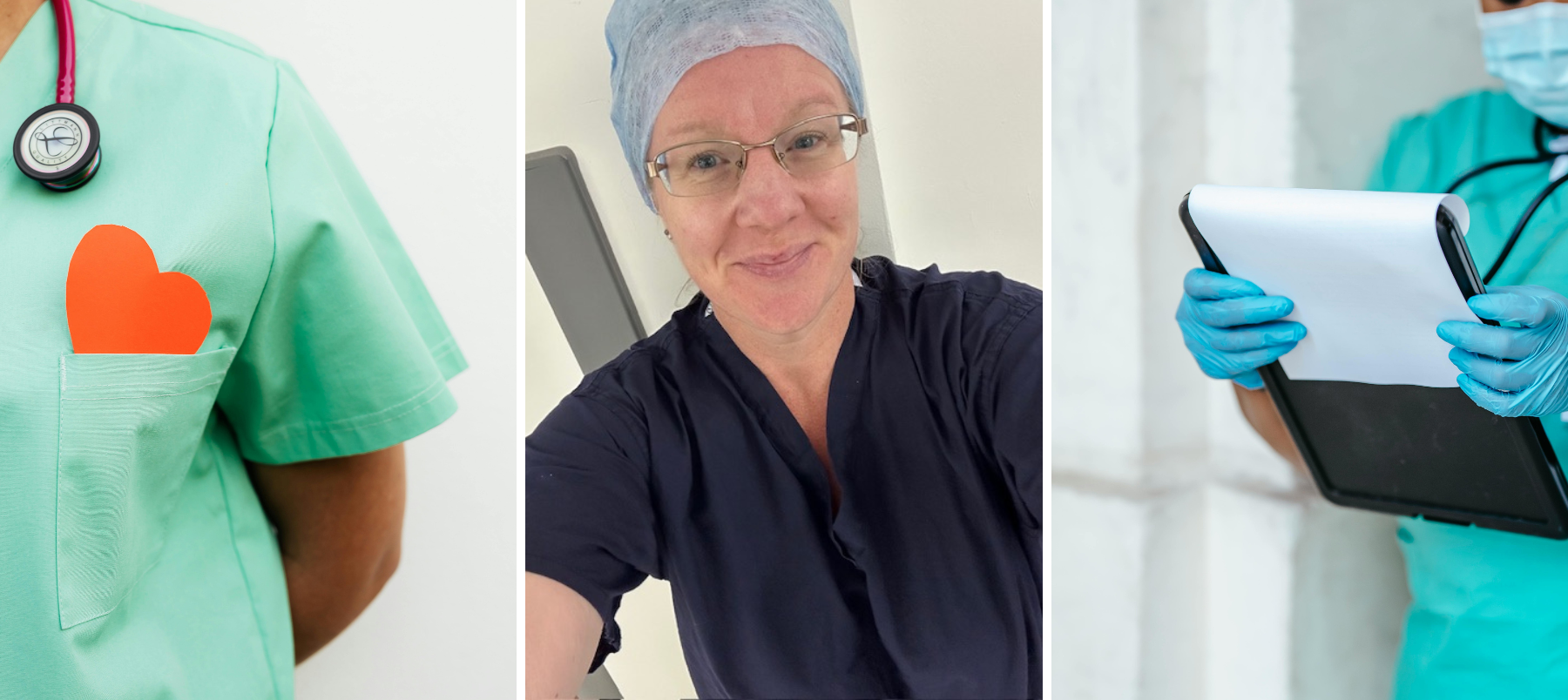
Hi Helen, tell us about your placement with the NHS Blood and Transplant Team
During my first year on the BA (Hons) Adult Nursing course, a potential placement with NHSBT was mentioned during a lecture and we needed to send an expression of interest to the lecturer. Those who expressed interest were then invited to a Teams call with NHSBT and the lecturers to learn more about what the placement would look like and confirm if it was still something we would like to do.
.png)
The placement overall was seven weeks. However, it was spread across different specialities and locations. I spent two weeks with the Blood Donation Centre in Chandler's Ford where they predominantly collect donated platelets and whole blood. I visited Reading Plasma Collection Centre for two days to see how pooled plasma is collected.
I spent two weeks in the John Radcliffe Hospital in Oxford at the Therapeutic Apheresis Service (TAS) where they collect Stem Cells for donation, administer plasma exchange, red cell exchange, offer CAR-T therapy and Extracorporeal Photopheresis (ECP).
.png)
I spent one week with the Mobile Whole Blood Collection teams, who work all over Hampshire, setting up ‘pop-up’ blood donation centres in town halls.
Then I spent two weeks with the Organ Donation Service with the SNODs (Specialist Nurses for Organ Donation). This was based out of Basingstoke Hospital, Southampton General Hospital, and Portsmouth Hospital but involved visiting Salisbury Hospital and the John Radcliffe in Oxford.
Why did you decide to go for it?
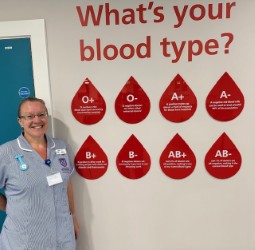
I’ve been a blood donor since I was 17. I have a rare blood group, and I am CMV Negative which means my blood goes to neonatal babies. I’ve always enjoyed being able to do this, knowing I can help someone so little and vulnerable by simply donating an hour of my time and a pint of blood. I was curious how the process worked from the other side. As a donor, we see the donation itself and we’re rewarded with a drink and snacks but I was curious how the blood was then ‘processed’ and what was involved.
.png)
What was a typical day like on placement?
The part of the placement relating to the Southampton Donor Centre and Reading Plasma Centre was very straight forward. It was based in one location; it was only 45 minutes from home and there was free parking on site. The collecting of the blood products was by far the easiest bit of the process. The checks and complexity come with how the blood is handled and processed, so there was a lot to learn. The role of the nurse in these areas is less clinical than a ‘traditional nursing role’.
The nurse interacts with the patients if their pre-donation health questionnaire brings up anything unusual. For example, medications they may be taking, countries they have visited, illnesses they have had. The nurse oversees the donor carers and the patients and there is often only one nurse in these centres. So, should an emergency occur, the donor carers rely on her clinical expertise. The platelet collection process carries with it an increased risk for the donor as an anticoagulant is used and the donor is connected to an apheresis machine for well over an hour. This can cause some physiological side effects which the nurse has to manage and can (rarely) cause a severe adverse reaction.
My time with TAS in Oxford was the only part of the placement where I worked with patients and nurses in clinical practice rather than with donors. Most who use the service are patients with auto-immune conditions, cancer patients and sickle cell patients. The Apheresis machines are used to take out blood or plasma from a patient and new/donated blood or plasma is returned to the patient to manage their conditions. They also offer CAR-T which is a very new treatment for blood cancer patients where their own stem cells are collected using Apheresis, they are then sent to a specialist laboratory, genetically modified and then returned to the patient post aggressive chemotherapy. ECP is another form of Apheresis where the buffy coat is extracted from the patients own blood and a medication is added to the buffy coat, its then activated with UV light and returned to the patient to help quieten their immune system.
.png)
Many of the nurse specialists here were previously dialysis nurses who now specialised in Apheresis. I got to attend the stem cell lab and see how the stem cells were processed and then stored. I learned lots about blood products and how they benefit the patients, what conditions require regular Apheresis. It was a very humbling experience to be able to speak with so many patients with lifelong conditions. I was shocked by how frequently patients needed to visit these centres to manage their conditions and the sheer volume of blood products used. One sickle cell patient was receiving 11 units of red cells every three weeks, for context that’s around three litres of blood!
.png)
Plasma exchange often involved around five litres of pooled plasma per exchange. Stem cell collection involved patients being connected to Apheresis machines for 3-4 hours for two to three days to extract the required number of stem cells. This opened my eyes to how life limited these conditions can be and how vital blood donation is. Although this part of my placement involved staying away from home a little more and some long car journeys, it was my second favourite part of the placement and I feel it was the area most relevant to traditional nursing.
My time with the whole blood team gave me great insight into the complexity and time which goes into creating the mobile donation centres. The donor carers are responsible for collecting the blood from the donors but also driving a lorry which contains all their equipment, unloading the lorry, setting up all the beds and stations for processing the blood bags and then closing and packing up at the end of the day. Their working day is very long and physically very demanding. Arriving two hours before the donors to set up and often packing up at 8pm at night to then load the van and return it to Southampton before they can drive home. Their area covers everywhere from north Hampshire to Southampton and past the New Forest. While the purpose-built donor centres can see around 40 donors per day, the mobile team often have over 130 donors per day. Still, there is usually only one nurse overseeing the shift and he/she is responsible for checking all donors can donate, ensuring the blood is packaged and labelled correctly and more. This part of my placement involved lots of travel as the venues changed daily and covered a large geographical area.
My favourite part of my time with NHSBT was with the SNODs, the organ donation team. I felt somewhat of an imposter as they were all at least a band 7 and had years of experience behind them. Most SNODs come from an ICU or ED background and their experience shows through. They are meticulously well organised, able to communicate at all levels and have a really challenging job. Most of what they do is hidden from the other teams or donor families but is incredibly complex. The organ retrieval is by far the smallest part of the entire process.
.png)
I spent a lot of time travelling with this aspect of my placement. I may start my day based in Southampton but get mobilised to Salisbury to assess a potential donor. The SNODs use all their clinical experience to determine if a person can donate. They check if they’re on the donor register, they examine their medical history, look at the circumstances of their admission to the ICU, they speak with the doctors caring for the patient, the medical examiners, coroners and physically assess the patient before approaching a family member to seek permission. If permission is granted a cascade of hurdles present, bloods need to be taken, an echo of the patients’ heart needs to be carried out, the family need to be supported and keepsakes created and processes carefully and delicately explained.
Specialist surgeons from all over the country need to be contacted and mobilised, transplant coordinators need to be contacted, and theatre time needs to be arranged. Finally, the transport of the organs needs to be organised and then once all this is arranged can the life sustaining treatment be stopped and the organs can be retrieved. The days were very long, there was a lot of travelling, seeing life sustaining treatment stopped was emotionally challenging and seeing organ retrieval was something I will never forget.
What key skills have you gained from your experience?
This placement is very ‘hands off’ and as a practical person I found this one of the hardest parts. There are very few clinical skills you can practice as you are mostly working with donors in a non-clinical setting. Many of the nursing roles with this aspect of NHSBT are management roles which rely on the nurses drawing on their past experience in clinical practice and combining it with excellent communication and management skills to oversee processes.
I was surprised at how many safety checks were in place in all the areas of NHSBT. Their SOP’s and guidelines contain references to evidence-based research papers which support their decisions and processes. I liked this aspect of the placement as it gave clear insight into their decision making.
I learned and experienced things I will never forget and have been truly humbled by. While it is hard to be hands off as I very much enjoy being a person who gets involved and helps, I do feel there is so much to learn on a placement like this.
The biggest take aways from my placement with NHSBT was the knowledge I gained. So many processes which are hidden from traditional nursing but play a key part in traditional nursing roles. I think it’s easy to take for granted what goes into giving a patient a unit of blood and now I know the whole story. The role of the SNODs and Apheresis nurses and how many lives they impact on a daily basis and the sheer complexity of their roles opened my eyes to another side of nursing.
What do you hope to do after you graduate?
During my time with the SNODs, several of them commented that they "forgot I wasn’t a baby-snod in training and that I was a second-year student nurse" and another commented she thought she "saw a snod in me" and I think this maybe my dream job. I have a good eye for detail, I like processes and procedures to follow and while my management and nursing skills are in their infancy, helping people and ensuring people get the best care when at their most vulnerable is a direction id like my career to head in.
I’m very aware that to be a SNOD I need a good time in an acute care, ideally critical care setting, as this is not a possible job for a newly qualified nurse. After spending some time with the specialist organ retrieval surgeons and the SNODs, I contacted one of their hospitals and have successfully secured an elective placement in one of the largest ICUs in the country. The hospital is a major cancer centre and specialises in complex emergency and planned surgeries and transplants. My hope is that by experiencing a big ICU in a specialist teaching hospital this will give me a good understanding of critical care and if I am suited to working in this kind of environment.
I have also enjoyed working with general surgical and surgical oncology patients during another placement and as a HCSW around my studies, so it is possible, if ICU isn’t for me that I may find myself working in an emergency surgery or complex surgery ward.
How did the University support you for the placement?
The university helped to put my mind at ease with respect to the difficulty in getting placement proficiencies signed off. I was concerned that because the placement was so hands off and involved working alongside nurses who predominately supported donors rather than patients that this would leave me unable to achieve all the competencies I needed for the year. However, they have considered this when allocating me my next placement, where I should be able to achieve the proficiencies, I need.
They also processed my expenses I needed to claim from the learning support fund quickly, which meant where I had been out of pocket for parking, travel and overnight accommodation, this was quickly reimbursed which made things easier for me.
They were also at hand if I needed them adding assessors to my EPad. As this was the first time the University had used NHSBT, none of the assessors were added to the EPad and needing to attend more than one setting which weren’t connected meant I needed more than one assessor, which is unusual on a placement.
Would you recommend a placement to others considering one?
Yes! But I do think you need to be a certain kind of person to get the most out of this placement. You need to be prepared to drive and travel and potentially stay away overnight, you need to be prepared that this is a hands-off placement and look beyond ‘traditional nursing role’ to truly learn how processes and people are managed.
The student needs a good deal of emotional intelligence and an ability to know when it is appropriate to ask questions, in particular with the SNODs. The families they are supporting are losing their loved one, often suddenly and you as a nurse are exposed to watching a person die while their family, sometimes including their children, are present and this can be emotionally distressing but needs to be handled with empathy and the utmost professionalism.
I think the University lecturers are good at judging a student nurses’ character and will be mindful who they place at NHSBT. Overall, as with any placement, you get out what you put in, if you are polite, proactive and respectful on placement things tend to go well. My top tip is bake cakes, I take them to every placement I attend and it gives you immediate brownie points with the team and instant rapport.
Back to blog