
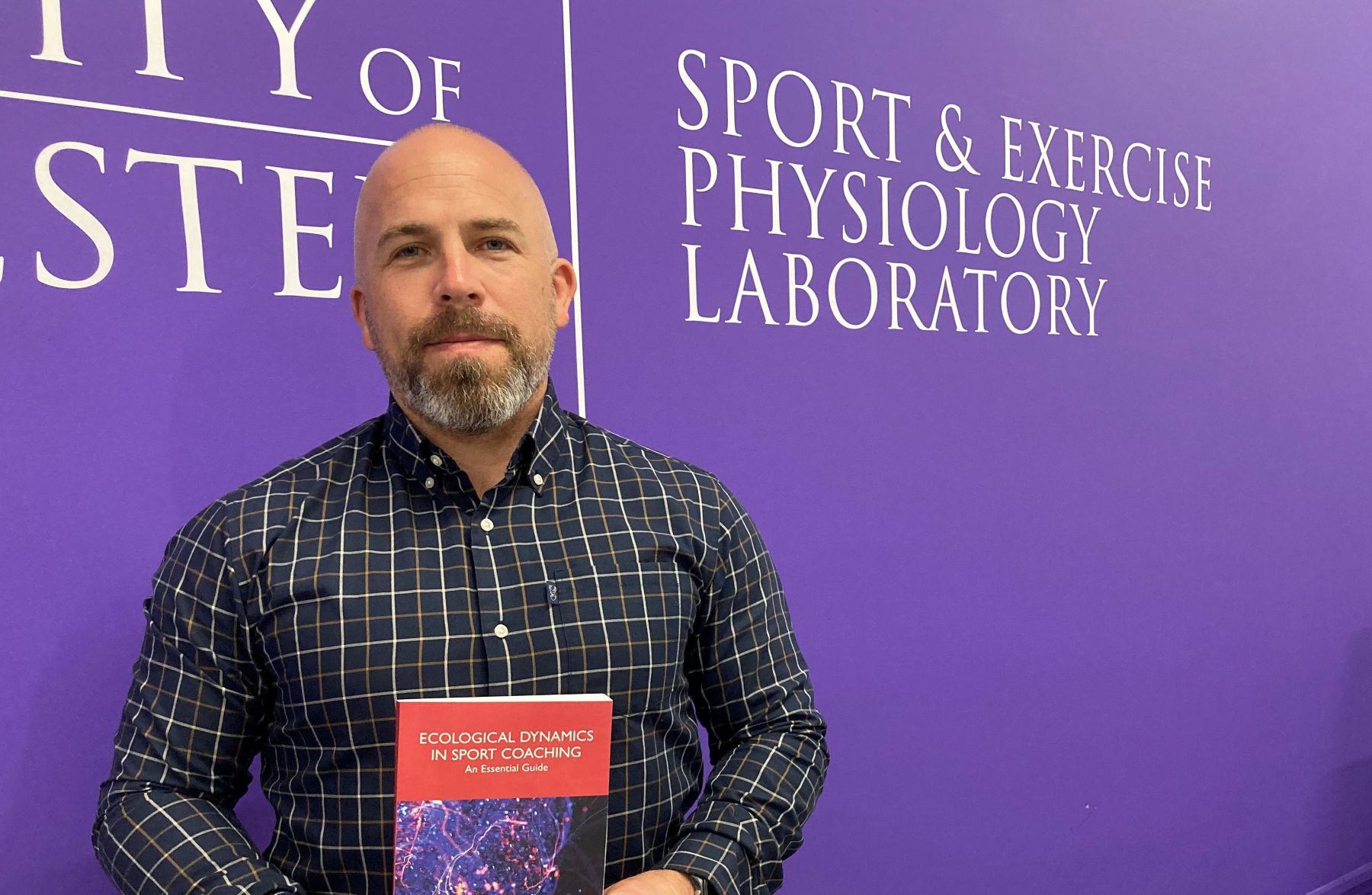
A University of Winchester academic has published a new book offering a contemporary approach to sports coaching.
Ecological Dynamics in Sport Coaching: An Essential Guide edited by Dr Steve Smith, Senior Lecturer in Sport Coaching and Psychology, provides a clear and practical way of understanding how sporting skills are acquired and developed.
Moving away from the traditional focus on repeating ideal techniques, Dr Smith presents a model grounded in how athletes in team and individual sports actually learn in real performance environments.
At the heart of the book is a simple but powerful idea: skill is developed through the connection between perception and action — in other words, what players see and feel directly shapes what they do. Crucially, learning must transfer into competition by containing the same types of information performers use in games.
Dr Smith said: “This book challenges the idea that there is one ‘correct’ way to perform a skill. Instead, it encourages coaches to become architects of the learning environment, designing situations where players learn to read the game, adapt, and discover their own solutions, rather than being told how to move based on a coach’s blueprint of ideal technique.”
Written for students, coaches, and PE teachers, the book translates academic ideas into language that is easy to understand and apply.
Drawing on real-world examples, the book demonstrates how coaches can design more effective training sessions to mimic match situations.
Rather than relying on isolated drills, it promotes realistic, game-based practices where players must make decisions under pressure.
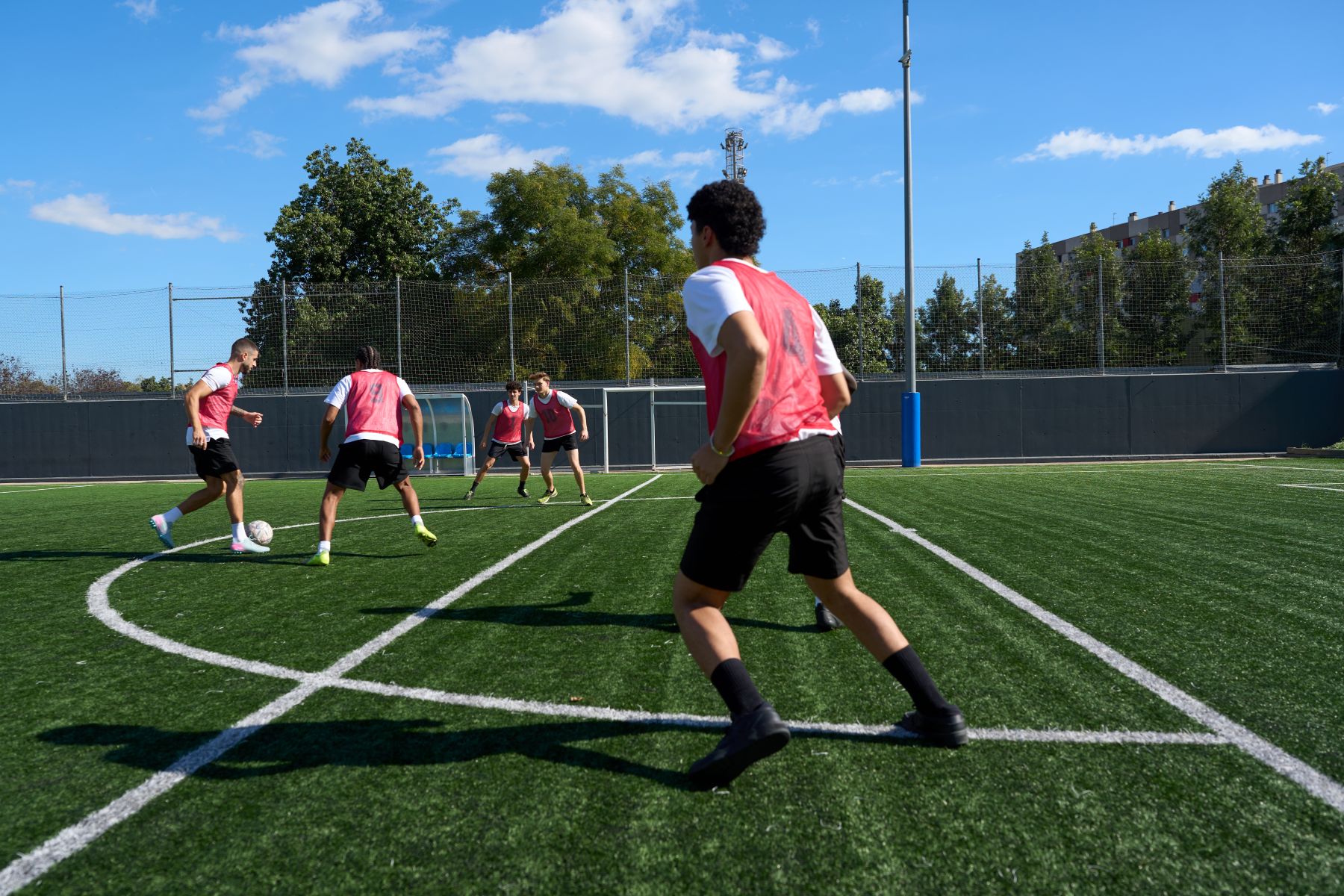
Using football as an example, Dr Smith says that instead of practising passing in unopposed lines, players should take part in small-sided scenarios where they must decide whether to pass or dribble based on defenders’ positions.
Other examples include training games that encourage players to switch play to exploit space and shooting practices where attackers must move in response to defenders before finishing.
Research highlighted in the book shows that footballers may only have the ball for around one minute in a 90-minute match, so good decision-making, positioning, and awareness without the ball are vital.
Dr Smith’s work is informed not only by research but also by his experience as a player and coach which enables him to bridge the gap between theory and practice.
He authored the opening section introducing ecological dynamics and contributed chapters on football and badminton. The book also includes contributions from experts in tennis, golf, Brazilian jiu-jitsu, showjumping, rugby union, hockey, cricket and basketball.
In the short time since its publication the book has already had an impact beyond the University.
James Bedwell, Curriculum Manager for PE at Itchen Sixth Form College in Southampton, said: “This book has been an excellent resource for how I approach both teaching and coaching. It takes ideas that can often feel complex and makes them really easy to understand and apply.
"The biggest shift for my team of coaches has been moving away from isolated drills to designing sessions where students and players have to think, adapt, and make decisions in realistic game situations. The examples are brilliant, especially the small-sided games and decision-making practices. It’s an invaluable resource for any PE teacher or coach who wants to do things properly.”
Ecological Dynamics in Sport Coaching: An Essential Guide is published by Routledge. For more information follow this link.
Back to media centre