
Film and Media
P350Studying Film and Media at the University of Winchester offers you the opportunity to build an understanding of the historical and contemporary developments in this major global industry and to critically examine central elements of Film Studies – such as production, reception, and textual functions – within the context of wider media history and culture, including the latest developments surrounding digital production techniques, algorithmic cultures and the use of AI in the industry.
Course overview
Through a variety of modules, you will learn transferable skills, creative thinking, and have opportunities to apply theoretical knowledge to practical projects. You will explore the history and development of film as a medium, techniques of narrative and storytelling, genre and questions of taste, representation and identities, fans and audiences, and many other exciting areas.
You are taught by a team of film specialists with different backgrounds, whose diverse research expertise is reflected in the breadth and scope of the curriculum.
Year 1 introduces you to the academic study of the media, developing a broad understanding of key issues, concepts and debates in a variety of contexts. There is a particular focus on the impact of digital media and the convergence of old and new media. You will have the chance to apply this knowledge of theory and history in practical modules where you will develop digital technology skills. You will also take two dedicated Film Studies modules: Introduction to Film and Film Form, Narrative and History.
In Year 2, you will study social media and research techniques ahead of your third year Extended Independent Project. You will begin your career planning by undertaking a work placement and can choose optional Film Studies modules such as British and European Cinema and Film Genres.
Your final year will include both Media and Film modules and a year-long Extended Independent Project that will allow you to demonstrate the full range of your knowledge and skills in a deep and sustained fashion. Optional modules include Big Data and Algorithmic Cultures; the Dark Side of the Net and Documentary and Photojournalism.

You will benefit from collaborating with fellow students from different programmes of study within the School of Media and Film in a friendly, interdisciplinary learning environment. This will provide you with a wide range of knowledge and experience, which will give you an edge in your chosen graduate career.
What you need to know
Course start date
September
Location
On campus
Course length
- 3 years full-time
- 6 years part-time
Apply
P350
Typical offer
96-112 points
Fees
From £9,790 pa
Why Winchester
- Explore the power of film and other modern media and gain a practical grounding for careers in the media industries
- Study the impact of digital media and the convergence of old and new media
- Deepen your understanding and enjoyment of film and develop your critical thinking as part of a lively community
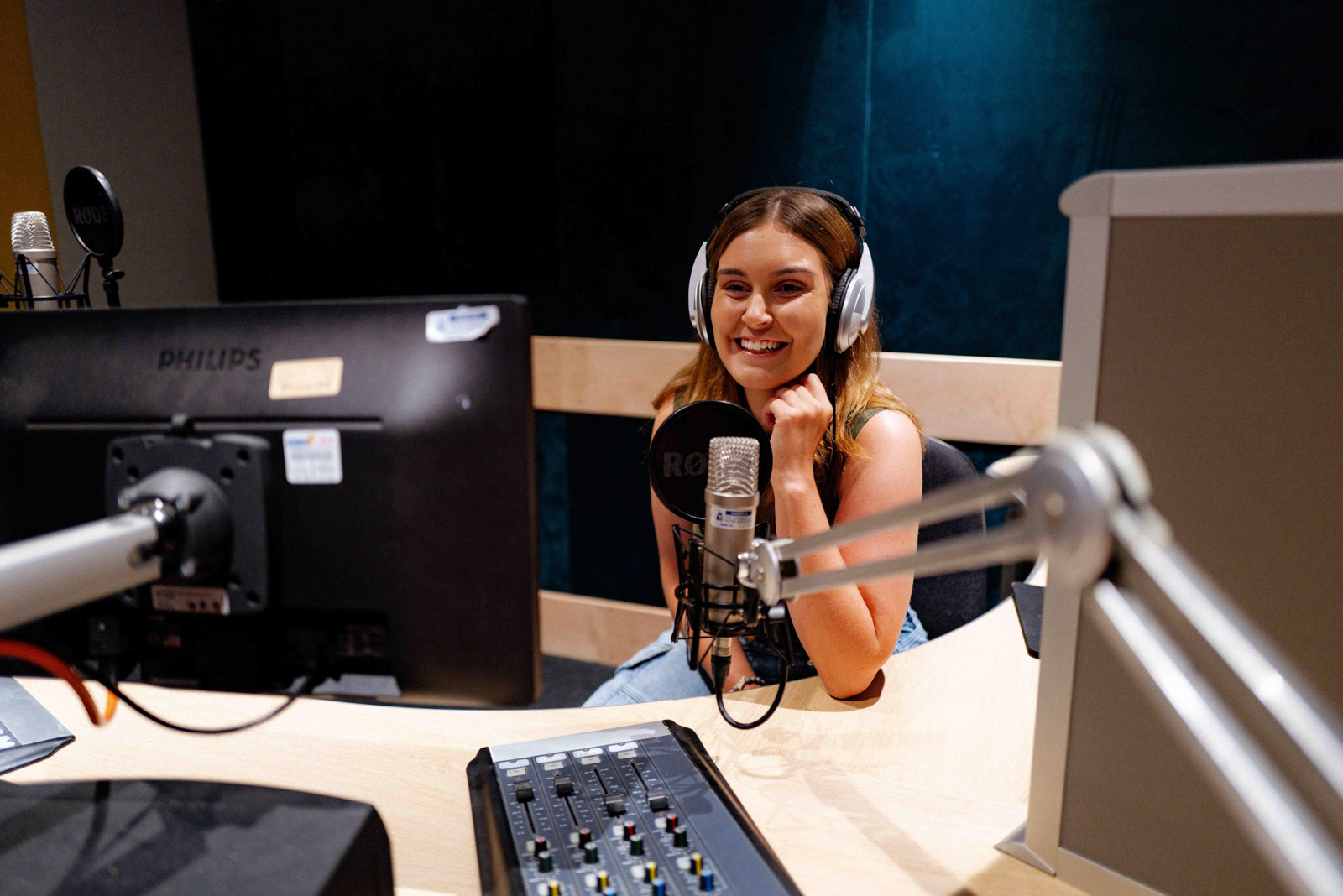
- Take advantage of outstanding industry-standard facilities to learn practical film techniques and skills at our on-campus Multimedia Centre
Course details
Work placements
Students have the opportunity to take part in field trips and gain work experience through volunteering. In Year 2 you can undertake a work placement as part of the Professional Journeys module.
Study abroad (optional):
Our BA (Hons) Film and Media Studies course provides an opportunity for you to Study Abroad in the USA or Canada in Year 2. For more information see our Study Abroad page.
Learning and teaching
Our aim is to shape 'confident learners' by enabling you to develop the skills needed to excel in your studies here and as well as onto further studies or the employment market.
You are taught primarily through a combination of lectures and seminars, allowing opportunities to discuss and develop your understanding of topics covered in lectures in smaller groups.
In addition to the formally scheduled contact time such as lectures and seminars etc.), you are encouraged to access academic support from staff within the course team, your personal tutor and the wide range of services available to you within the University.
Independent learning
Over the duration of your course, you will be expected to develop independent and critical learning, progressively building confidence and expertise through independent and collaborative research, problem-solving and analysis with the support of staff. You take responsibility for your own learning and are encouraged to make use of the wide range of available learning resources available.
Overall workload
Your overall workload consists of class contact hours, independent learning and assessment activity.
While your actual contact hours may depend on the optional modules you select, the following information gives an indication of how much time you will need to allocate to different activities at each level of the course.
Year 1 (Level 4): Timetabled teaching and learning activity*
Teaching, learning and assessment: 300 hours
Independent learning: 900 hours
Year 2 (Level 5): Timetabled teaching and learning activity*
Teaching, learning and assessment: 276 hours
Independent learning: 924 hours
Year 3 (Level 6): Timetabled teaching and learning activity*
Teaching, learning and assessment: 264 hours
Independent learning: 888 hours
Placement: 48 hours
*Please note these are indicative hours for the course.
Teaching Hours
All class based teaching takes places between 9am – 6pm, Monday to Friday during term time. Wednesday afternoons are kept free from timetabled teaching for personal study time and for sports clubs and societies to train, meet and play matches. There may be some occasional learning opportunities (for example, an evening guest lecturer or performance) that take places outside of these hours for which you will be given forewarning.
Assessment
Our validated courses may adopt a range of means of assessing your learning. An indicative, and not necessarily comprehensive, list of assessment types you might encounter includes essays, portfolios, supervised independent work, presentations, written exams, or practical performances.
We ensure all students have an equal opportunity to achieve module learning outcomes. As such, where appropriate and necessary, students with recognised disabilities may have alternative assignments set that continue to test how successfully they have met the module's learning outcomes. Further details on assessment types used on the course you are interested in can be found on the course page, by attending an Open Day or Open Evening, or contacting our teaching staff.
Percentage of the course assessed by coursework
The assessment balance between examination and coursework depends to some extent on the optional modules you choose. The approximate percentage of the course assessed by different assessment modes is as follows:
Year 1 (Level 4)*:
84% coursework
10% written exams
8% practical assessment
Year 2 (Level 5)*:
83% coursework
10% written exams
7% practical assessment
Year 3 (Level 6)*:
93% coursework
3% written exams
4% practical assessment
*Please note these are indicative percentages and modes for the programme.
Subject to revalidation
This programme is currently being enhanced through a final approval process, also known as revalidation, having received University Academic Portfolio and Planning Committee scrutiny and approval. This is a standard process whereby we adapt our programmes to ensure they provide the best possible learning experience for our students and incorporate any new subject or workplace developments and enrichments. Some indicative content, modules and assessment regimes may change and you can receive further information by contacting course.enquiries@winchester.ac.uk.
Modules
Please note the modules listed are correct at the time of publishing. The University cannot guarantee the availability of all modules listed and modules may be subject to change. The University will notify applicants of any changes made to the core modules listed. For further information please refer to winchester.ac.uk/termsandconditions
Modules
This module introduces students to the importance of storytelling in shaping media, culture and society. Combining theoretical exploration and creative practice, students will explore how narratives construct meaning, identity, and reality across different media forms and contexts.
Students will examine and apply narrative theories and concepts, from classical structures to contemporary approaches, and consider how stories circulate and evolve within the media.
Alongside critical discussion, students will develop their own original narratives in a chosen medium—such as video, audio, digital, or interactive design—aimed at attracting and engaging specific audiences.
The module encourages reflection on the ethical, social and material implications, including environmental and sustainability concerns, of storytelling in a connected world and supports the development of narrative skills, a key attribute across media, creative and communication industries.
This module introduces students to the essential technical and creative skills required for digital media production. It provides a foundation in multi-media design principles, media capture, editing, and integration using industry-standard tools. Emphasis is placed on building confidence with software, file management, and digital working practices while developing an understanding of how tools are used to create and refine visual outcomes. Students will explore the role of digital media in contemporary communication and develop a portfolio of practical work using industry-standard software including the Adobe Creative Cloud. The module also introduces and develops various skills required for the production of digital video, such as how to handle a camera, how to assess and capture sound and light, and how to edit footage.
The module offers an introduction to the basic procedures for reading film, writing about film and the terminology most widely used in film analysis. Methods of close textual analysis are explored, foregrounding major filmic devices, or procedures, such as mise-en-scène, editing, sound and narrative – encouraging students to investigate critically ways in which these devices contribute to meaning. The module also introduces students to the academic study of film by outlining concepts, theories and critical paradigms central to Film Studies. These include critical notions, debates and theories relating to genre, narrative, star study, film authorship, psychoanalysis and feminism. In addition, students are introduced to the concepts of semiotics and ideology, and to matters pertaining to spectatorship and audience reception.
This module builds on knowledge and skills acquired in Term 1, extending analytical skills in relation to the operation of film narrative, and introducing students to histories of cinema and ways of constructing film history. A range of narratological approaches will be introduced and considered against various films (for example, classical Hollywood narrative, German Expressionist cinema, Russian montage, and post-classical narrative forms). Additionally, students will be introduced to a range of national and international cinema movements, styles, and moments in film history, such as pre-cinema, the Hollywood studio system, post-classical Hollywood, the French New Wave, and ‘World/Transnational Cinema’. These will be explored through examination of key film texts, discussion of which will be framed by key factors behind their emergence and historical moments (touching upon economic, social, cultural, political, technical and geographical influences). Together, the two strands of the module expand and consolidate essential knowledge for the study of film.
Modules
This module aims to provide students with a thorough understanding of a number of the main theoretical approaches and research methodologies used in the discipline of media and communication. It focuses upon a number of key theoretical perspectives used in the study of the media, and connects these to relevant research techniques that are employed in researching texts, institutions and audiences, both in contemporary as well as historical contexts.
On completing this module, students will be able to choose which theories and research methods are most appropriate in developing their own original research questions, and be fully prepared to begin work on research that may form the basis of their final year projects.
A proliferating array of internet-connected devices now enable vast quantities of digital data to be extracted from increasingly intimate areas of our everyday lives. Search engines supposedly know our deepest fears. Algorithms track our tastes and provide us with targeted ads and media recommendations. Likewise, as more of us turn to the ‘cloud’ to store our photos and files, growing volumes of digital information and assets are moving into the hands of multinational technology corporations, intersecting in complex ways with the development of generative AI tools and platforms.
This module will interrogate the bleeding edge of media today by presenting a range of theories and concepts needed to critically navigate our contemporary culture and society – particularly how it is increasingly shaped by the interests of Big Tech. Students will consider the impact of technology on society and the environment to understand how to use it responsibly, and trace lines of development to explore potential futures and effects on their own lives and career trajectories.
Classifying and labelling films has occurred since early cinema in some shape or form. However, the framework for demarcating the boundaries of one type of film from another has been much debated and contested. Therefore, Film Genres considers a critical facet of filmmaking that relates to industrial practices, audience engagement and comprehension, and critical discourses around films. This module explores film genre by offering case studies of specific genres after examination of wider issues such as the importance of genre theory, definition of genre as a critical category and the place of genre in cinematic modes of production and consumption. The main focus, however, will be on the study of film genres such as gangster and crime film, science fiction and fantasy, superhero movies, comedies, rom-coms and musicals. Each case study will examine social and cultural contexts, institutional patterns, generic transformations, sub-generic forms, ideological resonances, and audience reception and fan cultures where relevant.
Please Note: This module’s overall content may vary year-by-year based upon the tutor or tutors leading and teaching on the module, with genres covered potentially being changed to reflect the research interests and knowledge bases of the staff.
Students can choose either Option Module A or Option Module B
Option Module A: Social Media, Branding, and Strategic Communication
This module introduces students to the study and practice of social media. It develops students’ ability to use social media strategically, while encouraging them to understand its applications across a range of contexts. Through theoretical perspectives and practical exercises, students will engage with key debates about the influence of social media on contemporary social and political issues, analyse campaigns and brand initiatives, and apply techniques in branding, storytelling, PR, and audience engagement. The module also addresses the ethical, legal, and professional challenges associated with social media use.
Option Module B: British and European Cinema
This module will offer case studies of British and European Cinema. In Term 1, the former area will be examined by drawing on understandings of class, gender and ethnicity to investigate the representation of national identity and examine areas such as comedy, Hammer horror, the ‘heritage film’, adaptations of British ‘classics’, the ‘Brit-Grit’ genre and the British ‘Rom-Com’. The case study of European Cinema focuses on contemporary film to explore concepts of national cinema, ‘art’ and ‘entertainment’, national identity and areas such as ‘belonging’ and ‘otherness’, memory and trauma, the role of the auteur and the function of popular genres.
Modules
The Extended Independent Study in Film and Media Studies will give you opportunities to employ the academic, critical and practical skills that you have acquired through the Film and Media Studies programme in order to pursue your own interests in developing either:
- a traditional academic research project (10,000-word dissertation) or
- a practical media project (for example a portfolio of journalism, videos, advertising campaign, public awareness campaign, producing a video game) alongside a shorter critical reflection of approximately 4,000 words.
Teaching and support will be provided throughout the year through regular tutorials with a designated supervisor as well as regular group study sessions.
This module supports students in connecting academic study with professional creative practice through industry engagement and career-focused development. Students undertake a work placement or client-led project that enables them to apply their skills within real or simulated professional contexts, building confidence, independence, and professional judgement. Alongside this, students develop a coherent professional portfolio and career strategy aligned to their chosen pathway within the creative industries. The course emphasises reflective practice, ethical awareness, research-informed decision-making, and professional communication. Through their portfolio development and critical reflection for career planning, students consolidate their creative and professional identity and prepare for transition into graduate employment, freelance practice, or postgraduate study.
Choose from:
Stardom and Desire - 30 Credits
The module raises questions about notions of stardom, evolutions of star systems, the history of star studies, and the relationships between star, audience, fandom and desire. Broad areas include correlations and discrepancies between connotations of ‘star’, ‘celebrity’ and ‘actor’. A range of methodologies are investigated, including textual analysis, semiotics, intertextuality and ethnography, illuminating the shifting signification of specific stars, over time, and across different cultures. Debates surrounding authorship and genre are explored, together with identity concepts such as race, ethnicity and gender. The module provides a close study of critical approaches to gender, desire and sexuality in film and media, interrogating critical frameworks, including psychoanalytic concepts of fantasy or desire and cultural constructions of sexuality. A range of materials are studied to explore these areas including film, popular magazines, social media, video games, advertisements, photography, music and television, analysing the complex relationship between star image, fandom, identity, desire and context.
Animation - 30 Credits
The module will consider the history of animation from early cinema through to contemporary computer-animated blockbusters, taking in traditional cel animation in studies of individual studio styles in the ‘Golden Age’ of Hollywood cartoons, avant-garde animation, animation and Art, anime, digital animation and the rise of contemporary studios such as Pixar, Dreamworks, Studio Ghibli and Aardman. Theoretical perspectives on realism, narration, gender, consumption and the function of film will be explored to analyse animation’s place within a history of moving images. Questions of representation and reception will also be addressed enabling a focus on how animation has used and challenged a range of stereotypes.
Choose from:
Media Mythologies: From Stories to Worlds - 15 Credits
A mythology is a narrative and symbolic structural formation which, rooted in socio-cultural beliefs and understandings concerning the nature of the world, gives shape and definition to relationship between individuals, communities, and wider societies.
In this module, students will explore mythologies both of the media and those which perpetuate through the media in our contemporary digital culture. Drawing from the work of Roland Barthes and later critics and theorists, they will critically engage with how the notion of a ‘mythology’ can be useful for articulating not just ancient belief systems, but the disposition of cultural discourses and socio-political narratives in the world today.
Topics may include media iconography and semiotics, transmedia and multimedia franchises, processes of remediation and reconciliation via technology and spectacle, virality and memetic media, affective media structures, the relationship between aesthetics and politics, as well as celebrity culture and 'relational media.'
Ghost in the Machine: Empathy, Design and Artificial Intelligence - 15 Credits
In the 21st Century, we have seen the shift from broadcast to participatory media. Now, empathic media is coming to the fore. This is media that monitors, responds to, and potentially manipulates users’ emotions and motivations. This might take the form of social media algorithms that seek emotional triggers to stoke our anger and maintain our attention; facial recognition technology that categorises and simplifies our rich emotional life to make predictions of our future behaviour; or AI-chatbots, masquerading as companions and friends, mimicking social relationships to drive platform use. This raises a range of new challenges for media consumers and producers.
Building on theory and approaches to categorising and understanding emotion and distinctions between human and emulated empathy, this module equips students to critically engage with and understand contemporary and future forms of media, interrogating trends to understand the social and industry-related impacts of this form of technology.
Choose from:
Political Communication: Media, Power and Society - 15 Credits
This module introduces students to the field of political communication by critically examining how political actors, media institutions, and citizens interact within contemporary democracies. Emphasising the role of the media in politics, students will engage with key theoretical frameworks in political communication, such as framing theory and the mediatization of politics, to understand how the media influences political processes including election campaigns, policy debates, social movements and armed conflicts. Drawing on these theoretical approaches, students will apply their understanding to analyse media texts and contemporary political issues and concerns, such as trust, through a series of case studies.
Creativity and AI - 15 Credits
Creativity and AI in design explores the evolving relationship between artificial intelligence, machine learning, and creative automation in the design industry. Students will develop an understanding of AI-driven tools, generative design, and ethical considerations while mastering both traditional and emerging design techniques. This module prepares students to work with innovative digital technologies and understand the evolving nature of design work.
Entry requirements
Our offers are typically made using UCAS tariff points to allow you to include a range of level 3 qualifications and as a guide, the requirements for this course are equivalent to:
A-Levels: CCC-BBC from 3 A Levels or equivalent grade combinations (e.g. BBB is comparable to ABC in terms of tariff points)
BTEC/CTEC: DMM from BTEC or Cambridge Technical (CTEC) qualifications International Baccalaureate: To include a minimum of 2 Higher Level certificates at grade H4.
T Level: Merit in a T Level
Additionally, we accept tariff points achieved for many other qualifications, such as the Access to Higher Education Diploma, Scottish Highers, UAL Diploma/Extended Diploma and WJEC Applied Certificate/Diploma, to name a few. We also accept tariff points from smaller level 3 qualifications, up to a maximum of 32, from qualifications like the Extended Project (EP/EPQ), music or dance qualifications. To find out more about UCAS tariff points, including what your qualifications are worth, please visit UCAS.
In addition to level 3 study, the following GCSE’s are required:
GCSE English Language at grade 4 or C, or higher. Functional Skills at level 2 is accepted as an alternative, however Key Skills qualifications are not. If you hold another qualification, please get in touch and we will advise further. If English is not your first language, a formal English language test will most likely be required and you will need to achieve the following:
If you will be over the age of 21 years of age at the beginning of your undergraduate study, you will be considered as a mature student. This means our offer may be different and any work or life experiences you have will be considered together with any qualifications you hold. UCAS have further information about studying as a mature student on their website which may be of interest.
If English is not your first language, a formal English language test will most likely be required and you will need to achieve the following:
- IELTS Academic at 6.0 overall with a minimum of 5.5 in all four components (for year 1 entry)
- We also accept other English language qualifications, such as IELTS Indicator, Pearson PTE Academic, Cambridge C1 Advanced and TOEFL iBT.
If you are living outside of the UK or Europe, you can find out more about how to join this course by contacting our International Recruitment Team via our International Apply Pages.
2026/27 Course Tuition Fees
| UK / Channel Islands / Isle of Man / Republic of Ireland |
International |
|
|---|---|---|
| Year 1* | £9,790 | £16,700 |

Additional tuition fee information
*(UK / Channel Islands / Isle of Man / Republic of Ireland) £9,790 for the 26/27 academic year. Fees for future academic years will be determined in line with our Terms and Conditions. The fee is currently subject to a governmental fee cap for each academic year. It is our policy to charge tuition fees at the level of the cap set by the Government. If the cap set by the Government changes, then we may increase our Fees in line with governmental policy.
*(International) £16,700 for the 26/27 academic year. Fees for future academic years will be determined in line with our Terms and Conditions. We decide the annual level of increase of our Tuition Fees by taking into account a range of factors including the cost of delivering the course and change in governmental funding.
Remember, you don’t have to pay any of this upfront if you are able to get a tuition fee loan from the UK Government to cover the full cost of your fees each year.
UK Part-Time fees are calculated on a pro rata basis of the full-time fee for a 120 credit course. The fee for a single credit is £81.58 and a 15 credit module is £1,223. Part-time students can take up to a maximum 90 credits per year, so the maximum fee in a given year will be the government permitted maximum fee of £7,335
International part-time fees are calculated on a pro rata basis of the full-time fee for a 120 credit course. The fee for a single credit is £139.14 and a 15 credit module is £2,087.
Additional costs
As one of our students all of your teaching and assessments are included in your tuition fees, including, lectures/guest lectures and tutorials, seminars, laboratory sessions and specialist teaching facilities. You will also have access to a wide range of student support and IT services.
There might be additional costs you may encounter whilst studying. The following highlights the optional costs for this course:
Optional
Overseas trip
Students have the option to attend a trip to a Film Festival throughout the duration of the course. Indicative cost: £375 per academic year.
Technology
It is recommended that students purchase their own hard-drive storage at the beginning of the course. Indicative cost: 2TB devices cost £80.
As one of our students all of your teaching and assessments are included in your tuition fees, including, lectures/guest lectures and tutorials, seminars, laboratory sessions and specialist teaching facilities. You will also have access to a wide range of student support and IT services.
Mandatory
Disclosure and Barring Service
A Disclosure and Barring Service (DBS) clearance check may be required if you undertake a placement, volunteering, research or other course related activity where you will have contact with children or vulnerable adults. The requirement for a DBS check will be confirmed by staff as part of the process to approve your placement, research or other activity. The indicative cost is £49.50. Please note that there may be additional costs if police checks from other countries are also required. However, most placements and research activities undertaken by Media and Communications students do not require a DBS check.
Work Placement
The mandatory placement in the second year and community media project in the third year, may incur travel costs that need to be covered by the student and depends on the location of departure and destination. Students may choose their own placement setting/s in agreement with the module Leader and Placement Co‐ordinator.
Scholarships, bursaries and awards
We have a variety of scholarship and bursaries available to support you financially with the cost of your course. To see if you’re eligible, please see our Scholarships and Awards.
Career prospects
On successful completion of the course you will be ready to enter a wide range of careers across the media and cultural industries, such as journalism, media management, film, television and video production, film criticism, social media branding, public relations and advertising.
The University of Winchester ranks in the top 25 in the UK for graduates in employment or further study according to the Graduate Outcomes Survey 2024, HESA.
Pre-approved for a Masters
If you study a Bachelor Honours degrees with us, you will be pre-approved to start a Masters degree at Winchester. To be eligible, you will need to apply by the end of March in the final year of your degree and meet the entry requirements of your chosen Masters degree.
Our careers service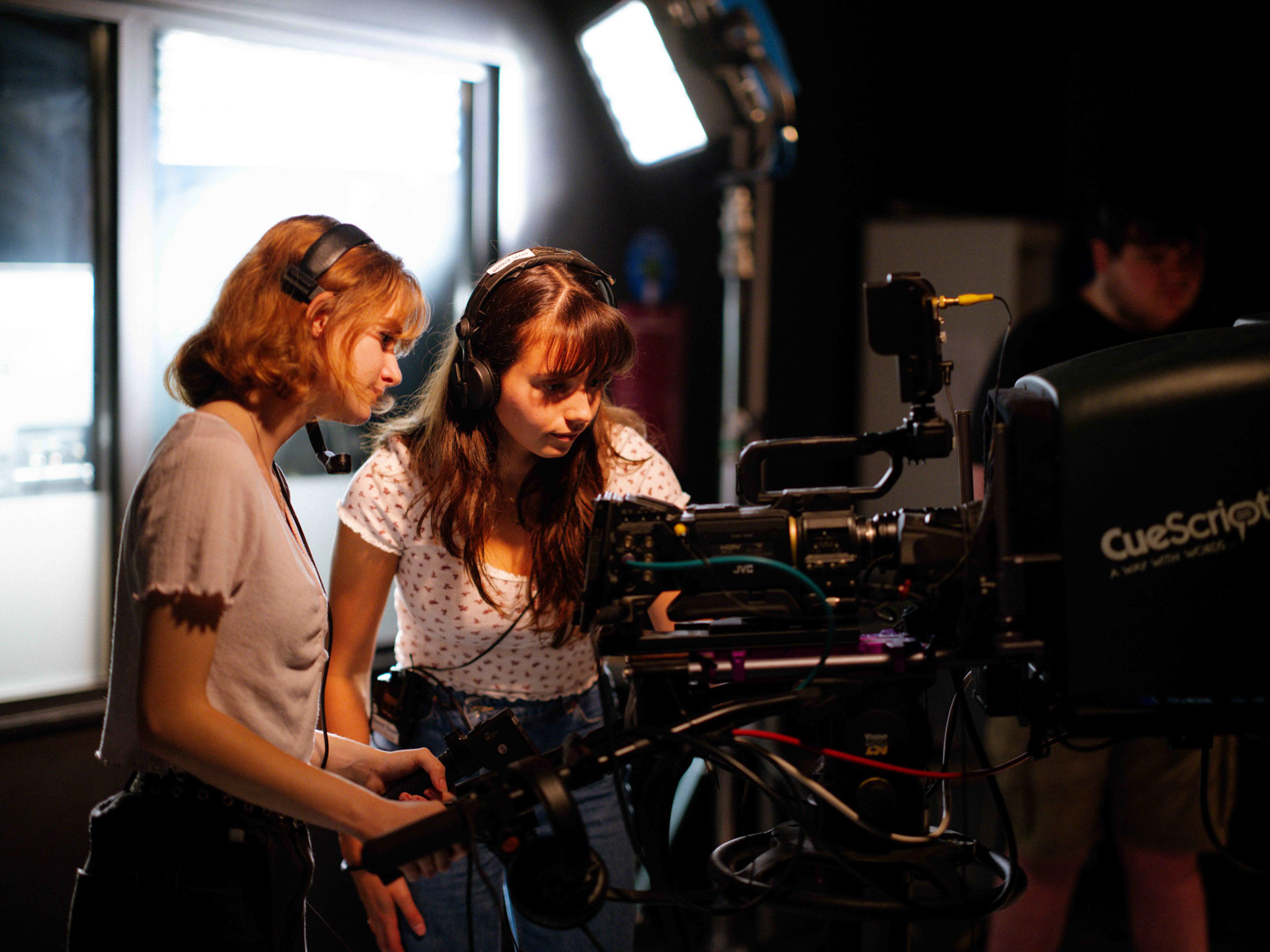
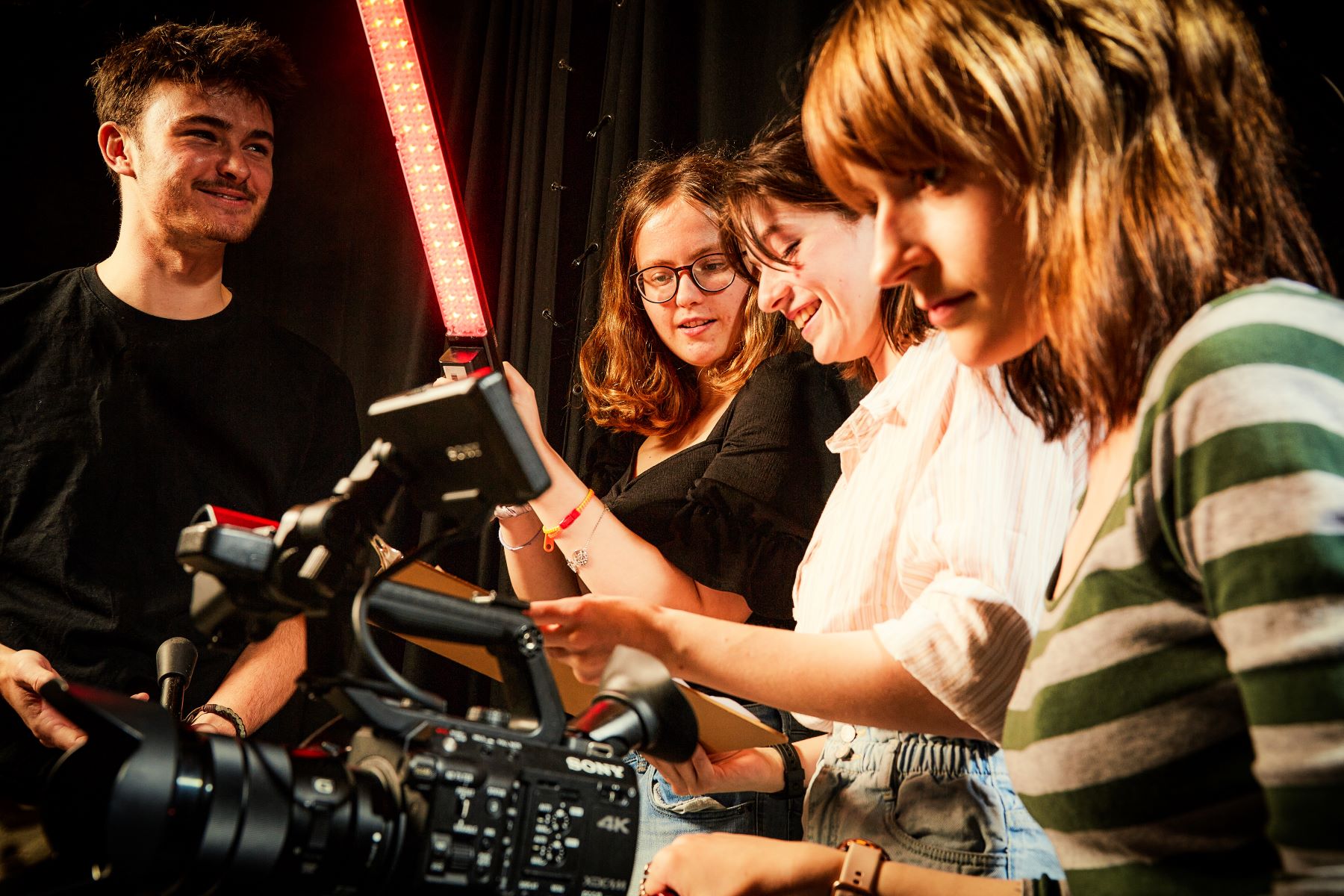
"I want to work in TV and the course has helped me experience what a real job in film production would be like."