
Criminology with Law
L375There are few subjects more compelling than crime and law. Together, they capture the public imagination, dominate the news headlines and rule the bestseller and TV box-set charts.
Course overview
Our fascinating Criminology with Law programme allows you to explore a wide range of criminal justice and penological concepts and issues. While focusing on a criminological approach to such topics, the legal learning offers additional depth to your studies. By bringing together political, social, cultural and philosophical perspectives on law and order, the programme offers an applied consideration of the contemporary justice issues faced in society.
This popular course has been designed to include the methodological, academic and practical skills essential to enhance your professional development and career opportunities. As such, you engage with crime related professionals, agencies and organisations to develop your understanding of how they work and apply newly-learnt theories.
During the course you also acquire skills of gathering data using quantitative and qualitative methods, synthesising and interpreting evidence and assembling arguments, presenting evidence and formulating findings and conclusions.
You have the opportunity, too, to become a member of The British Society of Criminology, which has been in existence for 50 years, and is the society for criminologists, both academic and professional, within the United Kingdom.
UNIVERSITY OF WINCHESTER PATHWAYS TO LAW, CRIME & JUSTICE PROGRAMME - OPEN FOR APPLICANTS FROM SEPTEMBER 2024 ONWARDS FOR 2025 ENTRY.
The Pathways to Law, Crime & Justice programme is an opportunity for prospective law, criminology, forensics and policing students to engage in a series of practical and informative sessions delivered by academics and practitioners at the Faculty of Law, Crime and Justice.
Participants in the Pathways to Law, Crime & Justice are eligible to receive reduced contextual offers on the following University of Winchester courses:
- LLB (Hons) Law
- BA (Hons) Law with Criminology
- BA (Hons) Criminology
- BA (Hons) Criminology with Law
- BA (Hons) Criminology with Psychology
- BA (Hons) Criminology and Sociology
- BSc (Hons) Forensic Investigation
- BSc (Hons) Forensic Science
- BSc (Hons) Professional Policing
Eligibility for the programme
The programme is open to all home/ Islands Year 12 and Year 13 students.
Programme activities include:
• Lectures and seminar activities based on a variety of legal topics
• Experience of practical legal exercises including mooting, client interviewing and negotiation
• Career guidance and advice from legal and criminal justice and policing professionals
• Optional interview experience with the Dean of Faculty or Head of Department
All activities are delivered live at the University of Winchester. Some activities are also delivered virtually.
For more information on the pathways programme and how to apply, register your interest here
Please click here for the Pathways to Law, Crime & Justice - Privacy Notice
What you need to know
Course start date
September
Location
Winchester campus
Course length
- 3 years full-time
- 6 years part-time
Apply
L375
Typical offer
104-120 points
Fees
From £9,790 pa
Course features
- Become proficient at using both legal and criminological approaches to solve complex problems in real casework on cold cases and case reviews
- Consider in-depth many aspects of criminology, including miscarriages of justice and investigating serious crimes
- Learn from a teaching team with wide ranging practitioner experience offering genuine insight into the criminal justice system
- Benefit from interactive and practical teaching approaches that bring theory and practice to life
- Opportunities for field trips to places such as Belfast and Turin
- Facilities that take you from crime scene to courtroom, including a dedicated Crime Scene House, a forensic decomposition research site, and a replica courtroom
- Opportunity to become a member of The British Society of Criminology
Course details
In Year 1, you gain an awareness of the key principles and concepts underpinning the study of crime. You also study modules on Crime Through Time, Police and Police Work, Victimology and Public Law.
In Year 2, you develop your understanding of contemporary criminological theory and study Penology. Optional modules may include Comparative Criminal Justice, Writings on Crime, Morality and Deviance, and Violent Crime. You also develop your ability to approach research in criminology.
In Year 3, you broaden your knowledge of topics in the field and put into practice your independent research skills by specialising in a topic of your own choice for your final year project. You can choose from a wide range of special interests from both fields, including Organised Crime, the Politics of Crime, Human Rights, and Media Law.
Learning and Teaching
Our aim is to shape 'confident learners' by enabling you to develop the skills needed to excel in your studies here and as well as onto further studies or the employment market.
You are taught primarily through a combination of lectures and seminars, allowing opportunities to discuss and develop your understanding of topics covered in lectures in smaller groups.
In addition to the formally scheduled contact time such as lectures and seminars etc.), you are encouraged to access academic support from staff within the course team and the wide range of services available to you within the University.
Independent Learning
Over the duration of your course, you will be expected to develop independent and critical learning, progressively building confidence and expertise through independent and collaborative research, problem-solving and analysis with the support of staff. You take responsibility for your own learning and are encouraged to make use of the wide range of available learning resources available.
Overall workload
Your overall workload consists of class contact hours, independent learning and assessment activity.
While your actual contact hours may depend on the optional modules you select, the following information gives an indication of how much time you will need to allocate to different activities at each level of the course.
Year 1 (Level 4): Timetabled teaching and learning activity*
Teaching, learning and assessment: 288
Independent learning: 912
Year 2 (Level 5): Timetabled teaching and learning activity*
Teaching, learning and assessment: 276
Independent learning: 924
Year 3 (Level 6): Timetabled teaching and learning activity*
Teaching, learning and assessment: 192
Independent learning: 936
Placement: 72
*Please note these are indicative hours for the course.
Teaching Hours
All class based teaching takes places between 9am – 6pm, Monday to Friday during term time. Wednesday afternoons are kept free from timetabled teaching for personal study time and for sports clubs and societies to train, meet and play matches. There may be some occasional learning opportunities (for example, an evening guest lecturer or performance) that take places outside of these hours for which you will be given forewarning.
Assessment
Percentage of the course assessed by coursework
The assessment balance between examination and coursework depends to some extent on the optional modules you choose. The approximate percentage of the course assessed by different assessment modes is as follows:
Year 1 (Level 4)*:
91% coursework
9% written exams
0% practical assessment
Year 2 (Level 5)*:
77% coursework
10% written exams
13% practical assessment
Year 3 (Level 6)*:
74% coursework
10% written exams
16% practical assessment
*Please note these are indicative percentages and modes for the programme.
Modules
Please note the modules listed are correct at the time of publishing. The University cannot guarantee the availability of all modules listed and modules may be subject to change. The University will notify applicants of any changes made to the core modules listed. For further information please refer to winchester.ac.uk/termsandconditions
Modules
This module explores the range and scope of issues and topics examined by the specialist discipline of Criminology including the nature of crime and the mechanisms and processes of the criminal justice system. The module aims to enhance students understanding of the multifaceted nature of crime and criminal justice through an examination of the social, political, and economic context of crime, criminal behaviour and the criminal justice system in England and Wales. Students will explore, evaluate, and analyse crime alongside the policies, practices, and reforms of criminal justice, including rights and protections afforded to individuals and society. Utilising interactive delivery styles, guest speakers and authentic case studies students will gain an authentic understanding of the complex nature of crime and the criminal justice system.
This module will introduce students to the historical and contemporary development of Criminology and victimology through the lens of leading thinkers in the discipline alongside social, political, and legal influences on criminality and victim status. Through an interactive delivery style students will identify, explain, and apply criminological theory to contemporary constructions of crime, criminality, and ‘victimhood’. Students will become familiar with a range of key themes that run through the array of Criminological theory and Victimology, developing a core understanding of how these varied views complement and contradict one another.
This module explores the concepts of identity underpinned and influenced by differing socio-economic, cultural, and environmental factors and their interplay with crime. This module aims to introduce students to different theories of identity within criminology, conceptions of multiple identities as well as experiences regarding crime and victimisation drawing on real-world examples. This examination will develop knowledge and analytical skills relating to how subcultural as well as labelling concepts effect criminological identities, alongside demonstrating the importance and place of volunteering within the context of criminal identities and influences on crime.
This module introduces legal and political sources of the British constitution, the relationship of the State towards its citizens and to other States, and to the scope of the courts to review government action. It also considers the legal and political sources of the constitution and the role of judicial review in monitoring and constraining executive actions. We also consider the role of EU law in regulating the actions of member states of the European Union
Modules
The module will introduce students to the tradition, principles, philosophies, and ethical considerations of conducting research within social sciences with a specific focus on criminological research. The aim is to equip students with the knowledge, understanding and skills needed to conduct primary research. They will experience the initial stages of the research process by identifying suitable topics and knowledge gaps, examining issues, considering methodological and analytical approaches to design and development a research proposal for their independent project/placement in their final year. They will engage with quantitative and qualitative data management, analysis and interpretation through fieldwork, workshops, and an employer provided dataset. Overall, students will develop a working knowledge of the relevant research skills they will need to complete their Independent Project/Placement and employment post-graduation.
This module introduces students to the police and policing in England and Wales, focusing on key debates on the role of the police with respect to the rest of society. The module examines topics such as policing by consent, legitimacy and public confidence, alongside contemporary issues such as stop and search, public protection, community policing and criminal investigations. Concepts such as police accountability and culture are examined to understand the influence of practice on public perception and future policing, alongside an exploration of the pluralisation of policing and crime prevention in recent decades. A range of agencies including the probation service, voluntary and arts organisations, the private sector and communities, and their multiple roles in policing and crime prevention are reviewed. Finally, the module critically examines the political contexts and ideologies that have underpinned this pluralisation of policing and crime prevention, with specific reference to the UK since the 1980s.
The criminal law provides citizens with a framework set of rules for conducting day to day activities. Under the criminal law, those people who have been found to fail to comply to these rules are punished. The state – through legislation and common law – uses its power to uphold these rules and award punishments to those who offend. The criminal law covers a wide range of behaviours that vary in severity and regularity. This module focuses on the fundamental principles of criminal law, including how crimes are committed and the use of defences. It also explores key offences against the person and property, including offences relating to homicide, sexual offences, theft (and related offences) and non-fatal personal offences.
Students can choose one of the following in term 1:
Digital Crime and Investigation (15 credits)
Technology is part of our everyday life, from smartwatches and mobile phones to smart technology, all providing a connection to the internet that can both enhance user experience and lead to malicious misuse. Additionally, because technology can confirm the use and/or location of comparable devices at a specific time it has become part of accepted evidence in court. Consequently, investigators need to emulate technological developments and the internet to ensure that evidence can be collected, analysed and be of evidential value in the court of law. This module draws on current criminal activities making use of the digital environment and cyberspace to examine methods of investigation on a practical, technical, social and legal level. Through this examination students will develop a critical understanding of digital crime and investigation to further their employment opportunities in crime investigation and prevention.
Youth Crime and Deviance (15 credits)
This module presents ‘youth’, ‘crime’, ‘deviance’ and ‘anti-social behaviour’ as social constructs and students will critically apply criminological theories to understand youth crime and deviance in a range of cultures and contexts, drawing upon race, gender, LGBTQ+, class, neurodiversity and the intersectionality between these. Students will examine youth involvement in contemporary crimes (e.g. knife crime and/or county lines), identifying how young people can be both offender and victim. We will consider media representation of youth crime/youth subcultures and debate around moral panic created by misrepresentation. This module provides insight into every stage of the youth justice system; police, courts, probation, Youth Offending Teams, Young Offender Institutions/secure training centres and multi-agency work to tackle youth crime. Trauma-informed practices and adverse childhood experiences are progressively embedded into services supporting youth offenders and we will explore different paradigms within youth justice, including punitive, ‘child first’, social harm-based perspectives and desistance-based approaches/interventions.
Students can choose one of the following in term 2:
Crime Mapping and the Criminology of Place (15 credits)
This module explores the multiple relationships between crime, space and place at a variety of scales. It considers crime in rural and urban settings and the ways in which the environment influences fear of crime. It also introduces students to researching crime through crime mapping using geographic information systems (GIS). It will provide critical overviews of crime mapping and crime data and explore a range of publicly available sources of crime data. Students will also compile their own crime data. The module will consider the applications of crime mapping and associated professional contexts. Students will be introduced to cartographic principles and techniques and GIS analysis. The module is delivered through a mix of lectures, workshops and practical crime mapping sessions.
Comparative Criminal Justice (15 credits)
The module aims to introduce students to international criminal justice models from around the world, focusing on lessons that can be learnt regarding differing legal positions, criminal justice systems, perspectives on crime and criminal behaviour, policing, court processes, prison systems, and human rights. Through an application of criminological theory and case studies students will develop the skills to critically compare global variations in justice and punishment.
Modules
The Independent Law Project/Work Placement module affords students the opportunity to choose to undertake EITHER (i) an extended independent study on an area of law which is of particular interest to them OR (ii) a work placement. Students undertaking option (i) will be assigned a supervisor who will support them to produce a coherent and detailed dissertation (10,000 words, maximum) which critically analyses a particular legal issue. These students are expected to formulate their own research question, conduct research (ie. find and critically analyse relevant primary and secondary legal sources), and appropriately structure an extended piece of writing that clearly expresses a central argument. Students undertaking option (ii) will work within a professional legal environment for a minimum of 120 hours. This is an opportunity for students to develop their employability skills and career identity, improve their understanding of legal practice, and gain tangible experience in the workplace. The work placement hours for this module are to take place within semester dates and will normally be on one chosen day per week.
This module provides an overview of the complex and dynamic area of international criminal law. It examines its historical origins, such as Nuremberg IMT, as well as the modern institutions such as the permanent International Criminal Court. It explores the core crimes, such as a genocide and war crimes. This module actively encourages students to critically analyse how the international criminal courts and tribunals operate in practice, and whether they are capable of making a lasting contribution to peace and justice.
Evidence is the information used in courts which assists decision-makers in proving matters. This module studies the role of evidence in the courtroom and the rules and procedures surrounding the use of evidence. It examines what types of evidence enter court, how evidence is considered, and how fact-finders (including juries) may interpret such evidence.
Within this, the module examines issues relating to the presentation of evidence, how evidence is evaluated and the principles governing its use as a tool in legal proceedings. The rules of evidence will be explored, alongside different types of evidence. The module will evaluate their limitations and identify the potential risks associated with this evidence. Different types of evidence will be explored, breaking down their benefits, limitations and identifying additional concerns (such as adverse inferences, potential infringement of ECHR rights, and following “bad” science).
Students can choose one of the following 30 credit modules:
Punishment and Desistance (30 credits)
This module explores theoretical and practical issues surrounding the effectiveness of prison as punishment, focussing upon current penal conditions in England and Wales and prison officers as ‘caretakers’ in the distribution/legitimacy of punishment. Through real-life case materials and experiences students will be able to contextualise carceral landscapes and apply critical penological perspectives to understand competing ideologies around control/security, care, and hope/possibility in carceral settings. Examination and critical discussion of prison reports will facilitate a critical discussion on the effectiveness of benchmarking criteria alongside ethical and moral issues around incarceration/sentencing and how non-custodial sentences might better support desistance, rehabilitation, reintegration and reduce recidivism. Finally, this module will debate the importance of paradigm shifts within criminal justice to support effective offender reintegration; underpinned by left and right critical realist approaches (penal populism) giving students an insight into real world/lived experience to take forward into future employment within the Criminal Justice sector.
Organised Crime and Modern Slavery (30 credits)
This module examines the multifaceted world of organised crime and modern slavery, presenting a nuanced exploration of their development, impact, and the challenges in combating them. The course begins by examining the local and global factors that contribute to the formation of criminal organisations, their connections with politics, and the blurred lines between legal and illegal economies. Special focus is on how globalization has transformed organised crime, including an analysis of IT-related crimes, moral panic, social control, and political dimensions. The module then transitions to discussing the nature, extent, and patterns of modern slavery, engaging with the debates and challenges victims face. It places a particular emphasis on the legislative frameworks surrounding modern slavery and human rights protection, covering the identification, support, and care for victims. This includes considerations of gender, stakeholders, and secondary victimisation, offering a thorough understanding of these critical issues from multiple perspectives.
Students can choose one of the following in term 1:
Criminal Bodies (15 credits)
This module covers the criminological theories and approaches which link a criminal attitude with the individual body, or certain bodily characteristics. From explanations that have roots in the old Lombrosian theories to the most modern scientific devices in order to prove their point, the module explores the central role of the body - discusses the concept of “stigma” (bodily/ mentally/ behavioural) in the modern criminological approaches, reflects on the treatment different categories of people get when they have contact with the Criminal Justice System, and looks at the contemporary techniques that treat/prevent crime by managing and disciplining the bodies. The students will be urged to adopt a critical attitude during the module, and to provide evidence of their understanding of the module lectures.
Identity, Equality and Crime (15 credits)
This module will explore the various ideologies and aspects of inclusion, exclusion, equality, and cultural identity and how this relates to crime and the criminal justice system. To do this, particular attention will be given to the historical development of these concepts and how this has informed our understanding and development of criminal justice legislation, policies, and practices. The module will also examine how ideas, practices and responses to crime have developed surrounding those who are ‘marginalised’ through discursive and social practices. This is underpinned with considerations of the societal perceptions and lived/personal experiences. This will all be drawn together to critically examine how it exists within the structure of contemporary society.
Students can choose one of the following in term 2:
Addiction, Crime and Control (15 credits)
This module aims to introduce students to the core debates and controversies surrounding addiction and substance abuse and how these issues are constructed, measured, and responded to from a social, medical and criminal justice perspective. The module critically explores the development, rationale and effectiveness of policies intended to control the supply and use of substances and addictive behaviours linked to crime. Using real-life narratives students will gain a critical understanding and deeper appreciation of the complex substance-offending relationship, the pattern and nature of offending, and the intricacies of recovery from a theoretical, political, social, and individual perspective.
Sport and Crime (15 credits)
Sport permeates every aspect of our lives, including media representation, participation, spectating and employment opportunities. However, sporting contexts are contaminated by deviant and criminal activities. This module will draw upon contemporary case studies and apply criminological/sociological theories to understand a range of sporting crimes, and the contested nature of such crimes. Students will explore racism, LGBTQ+, gender and disability as identities within sport that can lead to discrimination, physical and online abuse, and hate crimes. Drug taking and doping, corruption/crimes of the powerful, human rights abuses, sexual abuse/violence and animal abuse are all key areas explored within this module. Sport can facilitate crime, but it can also reduce crime and provide pathways away from offending (desistance). This module allows students to draw upon case studies of personal interest to examine sport related crimes from local, national and global perspectives identifying the underlying political, economic and social factors involved.
Entry requirements
Our offers are typically made using UCAS tariff points to allow you to include a range of level 3 qualifications and as a guide, the requirements for this course are equivalent to:
- A-Levels: BCC-BBB from 3 A Levels or equivalent grade combinations (e.g. BBB is comparable to ABC in terms of tariff points)
- BTEC/CTEC: DMM from BTEC or Cambridge Technical (CTEC) qualifications
- International Baccalaureate: To include a minimum of 2 Higher Level certificates at grade H4
- T Level: Merit in a T Level
Additionally, we accept tariff points achieved for many other qualifications, such as the Access to Higher Education Diploma, Scottish Highers, UAL Diploma/Extended Diploma and WJEC Applied Certificate/Diploma, to name a few. We also accept tariff points from smaller level 3 qualifications, up to a maximum of 32, from qualifications like the Extended Project (EP/EPQ), music or dance qualifications. To find out more about UCAS tariff points, including what your qualifications are worth, please visit UCAS.
In addition to level 3 study, the following GCSE’s are required:
GCSE English Language at grade 4 or C, or higher. Functional Skills at level 2 is accepted as an alternative, however Key Skills qualifications are not. If you hold another qualification, please get in touch and we will advise further.
If you will be over the age of 21 years of age at the beginning of your undergraduate study, you will be considered as a mature student. This means our offer may be different and any work or life experiences you have will be considered together with any qualifications you hold. UCAS have further information about studying as a mature student on the UCAS website which may be of interest.
If English is not your first language, a formal English language test will most likely be required and you will need to achieve the following:
- IELTS Academic at 6.0 overall with a minimum of 5.5 in all four components (for year 1 entry)
- We also accept other English language qualifications, such as IELTS Indicator, Oxford ELLT, Pearson PTE Academic, Cambridge C1 Advanced and TOEFL iBT.
If you are living outside of the UK or Europe, you can find out more about how to join this course by contacting our International Recruitment Team via our International Apply Pages.
2026/27 Course Tuition Fees
| UK / Channel Islands / Isle of Man / Republic of Ireland |
International |
|
|---|---|---|
| Year 1* | £9,790 | £16,700 |

Additional tuition fee information
*(UK / Channel Islands / Isle of Man / Republic of Ireland) £9,790 for the 26/27 academic year. Fees for future academic years will be determined in line with our Terms and Conditions. The fee is currently subject to a governmental fee cap for each academic year. It is our policy to charge tuition fees at the level of the cap set by the Government. If the cap set by the Government changes, then we may increase our Fees in line with governmental policy.
*(International) £16,700 for the 26/27 academic year. Fees for future academic years will be determined in line with our Terms and Conditions. We decide the annual level of increase of our Tuition Fees by taking into account a range of factors including the cost of delivering the course and change in governmental funding.
Remember, you don’t have to pay any of this upfront if you are able to get a tuition fee loan from the UK Government to cover the full cost of your fees each year.
UK Part-Time fees are calculated on a pro rata basis of the full-time fee for a 120 credit course. The fee for a single credit is £81.58 and a 15 credit module is £1,223. Part-time students can take up to a maximum 90 credits per year, so the maximum fee in a given year will be the government permitted maximum fee of £7,335
International part-time fees are calculated on a pro rata basis of the full-time fee for a 120 credit course. The fee for a single credit is £139.14 and a 15 credit module is £2,087.
Additional costs
As one of our students all of your teaching and assessments are included in your tuition fees, including, lectures/guest lectures and tutorials, seminars, laboratory sessions and specialist teaching facilities. You will also have access to a wide range of student support and IT services.
There might be additional costs you may encounter whilst studying. The following highlights the mandatory and optional costs for this course:
Optional
Textbooks
For some modules, students are strongly recommended that they purchase one or two books (usually a general textbook or a sourcebook that is used weekly across a module). Indicative cost is £150 per academic year.
Field trips
Some optional criminology modules may involve a field trip. Indicative cost is £500 for each trip.
SCHOLARSHIPS, BURSARIES AND AWARDS
We have a variety of scholarship and bursaries available to support you financially with the cost of your course. To see if you’re eligible, please see our Scholarships and Awards.
CAREER PROSPECTS
Graduates are equipped for a wide range of criminal justice careers including the police service, youth and probation work, and the prison service. The Home Office, HM Revenue and Customs, legal firms and other relevant support roles in crime-related work are also potential employment routes.
The University of Winchester ranks in the top 10 in the UK for graduates in employment or further study according to the Graduate Outcomes Survey 2023, HESA.
Pre-approved for a Masters
If you study a Bachelor Honours degree with us, you will be pre-approved to start a Masters degree at Winchester. To be eligible, you will need to apply by the end of March in the final year of your degree and meet the entry requirements of your chosen Masters degree.
OUR CAREERS SERVICE
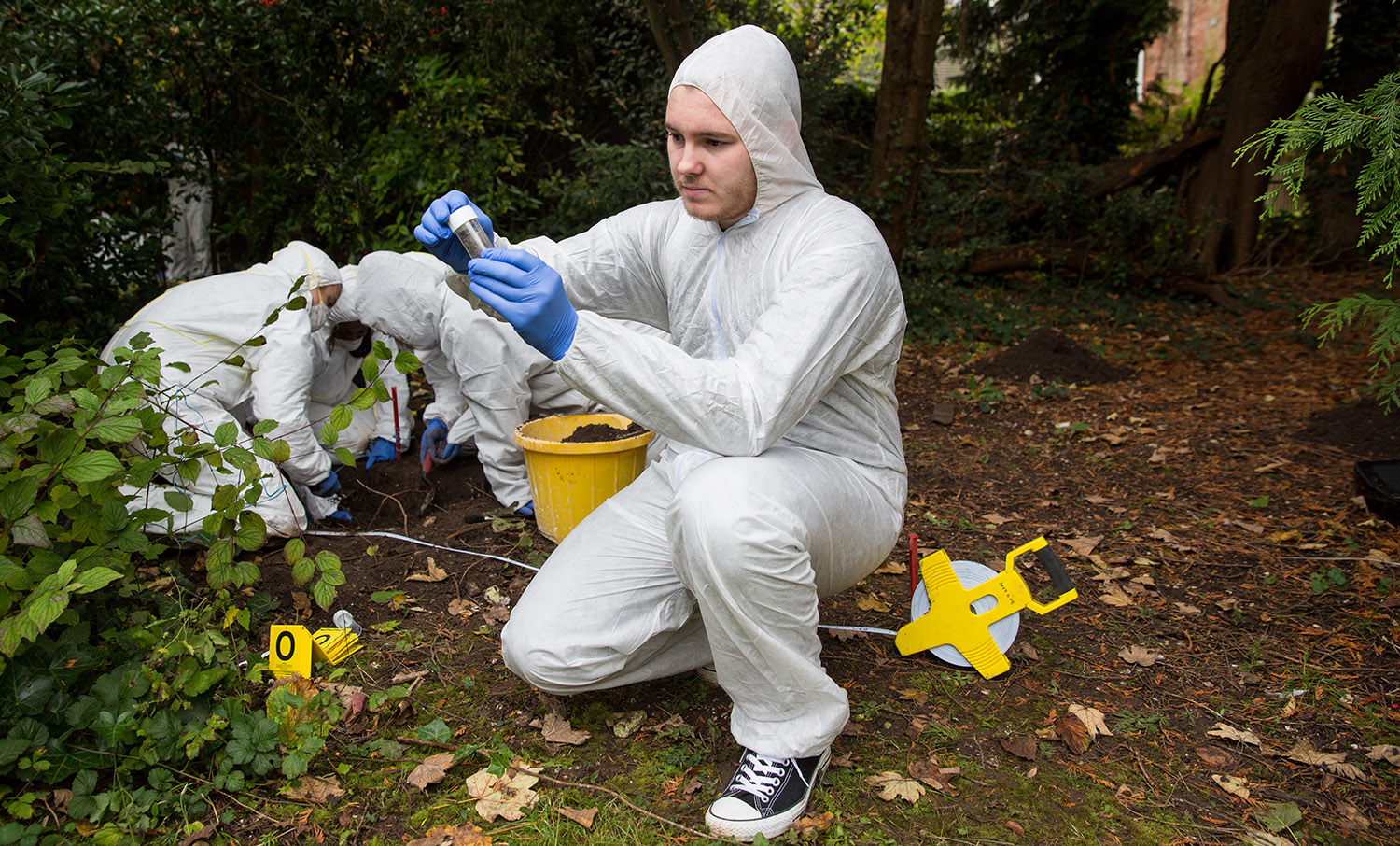
'Students aren't just learning from textbooks, they're learning from real life experiences and case studies'.