
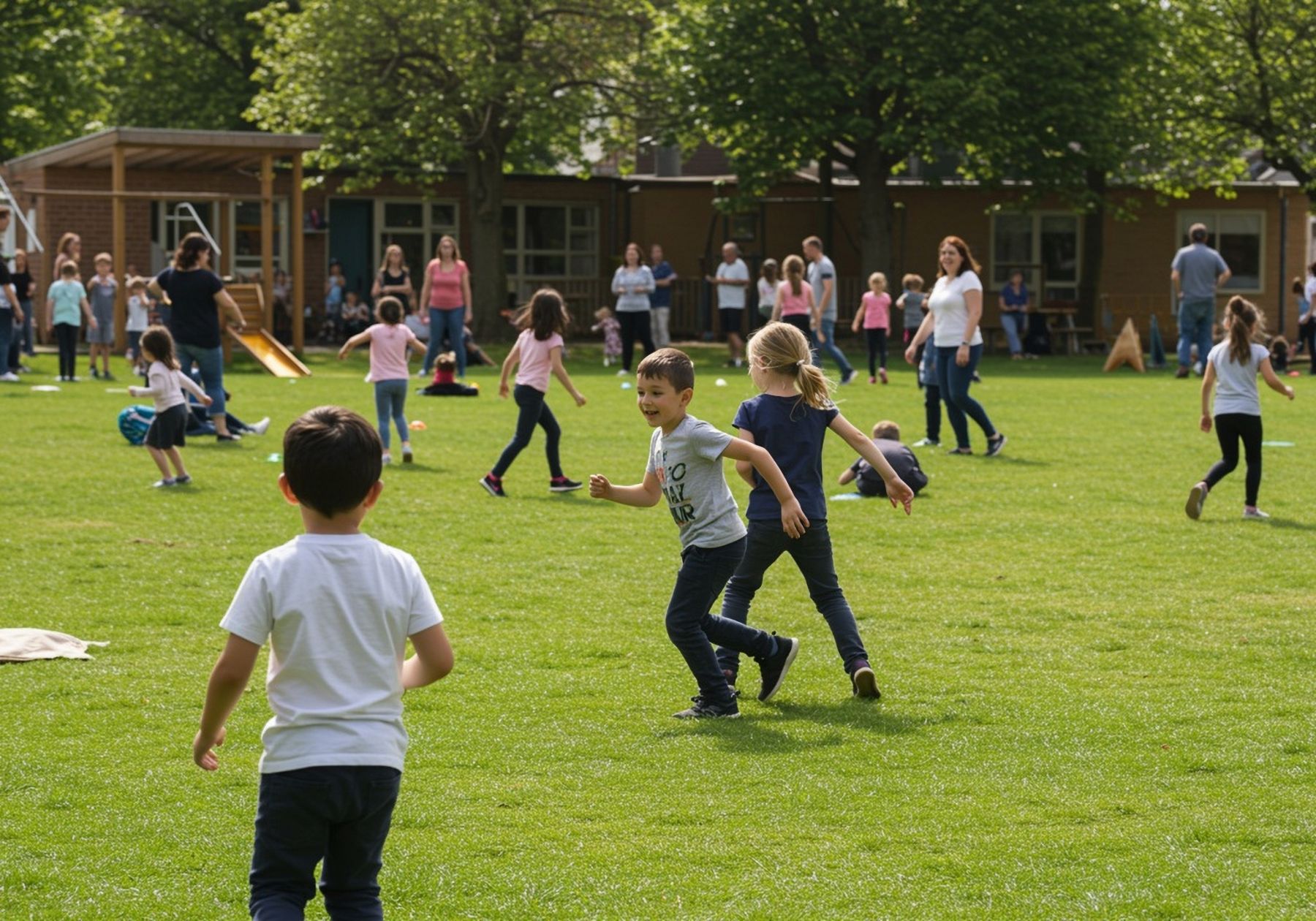
Parents should not have to assume an organisation takes safeguarding seriously. They should be able to recognise it, ask about it and expect it, writes Dr Simon Fox FRSA, Head of the Department of Policing, Criminology and Forensics at the University of Winchester, who played a key role in developing the safeguarding specification PAS 5222 for Out-of-School Settings.
It is 6pm on a Tuesday. A parent drops their son at football training while another leaves their daughter at dance class. A family arrives at a holiday resort knowing their children will be taking part in organised activities with adults they have never met. Elsewhere, a 16-year-old begins their first part-time job in a supermarket, while another starts work in a hotel.
Moments like these are repeated thousands of times every day across the UK. Each begins with an act of trust. Parents and carers trust that the organisations responsible for their children have done everything reasonably possible to keep them safe. Usually, that trust is well placed.
Yet trust should never depend upon assumption alone. It is strongest when supported by evidence.
We read reviews before booking a hotel, look for hygiene ratings before choosing a restaurant and expect electrical products to comply with safety standards.
When it comes to safeguarding children, however, reassurance is often far less visible.
Perhaps that should change.
Safeguarding legislation and statutory guidance provide an essential foundation for protecting children. However, much of a child's life takes place beyond settings governed by statutory safeguarding duties.
Every week, millions of children participate in sports clubs, dance schools, drama groups, tutoring centres, cadet organisations, faith groups, holiday clubs and community activities. As they grow older, many take their first steps into employment, working in cafés, shops, restaurants, hotels and visitor attractions. These organisations play an invaluable role in helping young people develop confidence, independence, skills and resilience.
They also share an equally important responsibility: keeping children and young people safe.
For many years, however, there was no nationally recognised safeguarding framework designed for this diverse sector. Organisations were left to use guidance developed for very different environments, resulting in inconsistency and varying levels of confidence.
Every child should be able to learn, play, work and participate in community life within environments where safeguarding is embedded in organisational culture rather than treated as an admin exercise. That principle led to the development of PAS 5222 - Child Safeguarding. Provisions for Out-of-School Settings.
Developing the UK’s first safeguarding specification for out-of-school settings brought together experts from policing, education, safeguarding, local government, charities, sport, business and industry. Their common objective was to create a practical, evidence-informed framework to help organisations strengthen safeguarding and promote greater confidence among the children, families and communities they serve.
As Technical Author of PAS 5222, my role extended beyond coordinating the drafting process. I developed the initial structure, framework and first draft of the specification. From there, successive drafts underwent rigorous review, challenge and refinement through a steering group representing policing, education, safeguarding, local government, charities, sport and business. The draft specification then underwent formal public consultation, ensuring that the final publication reflected expert consensus and the practical experience of the sectors it was designed to support.
One principle remained constant: safeguarding is strongest when it is part of an organisation's culture rather than a response to regulation.
Developed through the British Standards Institution (BSI), PAS 5222 is much more than a technical document. It is the UK’s first national safeguarding specification, giving organisations an evidence-informed framework to review their safeguarding arrangements, identify opportunities for improvement and embed safeguarding into leadership, governance and everyday decision-making.
It is not designed to create unnecessary bureaucracy or add another policy to the shelf. Rather, it seeks to encourage organisations to see safeguarding as a continuous process of improvement that underpins everything they do all the time.
Parents and carers should not have to rely on trust alone. They should expect organisations to demonstrate how seriously they take safeguarding, be able to recognise that commitment and feel confident asking questions about it.
For businesses employing young people, sports clubs, charities, holiday providers, visitor attractions and community organisations safeguarding should not be regarded as a legal obligation but as an integral part of organisational quality.
Nationally recognised standards make good safeguarding visible—and visible safeguarding builds confidence, strengthens trust and raises standards.
A recognised standard provides organisations with a benchmark against which they can assess their own practice, identify opportunities for improvement and demonstrate their commitment to safeguarding. For parents and carers, it offers reassurance that safeguarding has been considered systematically.
My hope is that PAS 5222 becomes recognised in the same way as other trusted indicators of quality. Consumers routinely look for food hygiene ratings before choosing a restaurant or recognised safety standards when purchasing electrical products. Those standards do not remove the need for judgement but provide confidence that independent expectations have been met.
This is not about creating league tables or displaying certificates for marketing purposes. It is about making safeguarding visible so that parents, carers and young people feel confident discussing it and organisations are encouraged to demonstrate the importance they place upon it.
Asking Better Questions
Most parents are not safeguarding specialists but they should feel able to ask reasonable, straightforward questions about the environments in which their children spend time.
Organisations that value safeguarding should welcome the chance to answer these questions.
Those conversations benefit everyone. Parents gain confidence, organisations can demonstrate good practice and safeguarding is a part of organisational culture rather than something discussed only when things go wrong.
The greatest value of PAS 5222 is not the document itself but what it represents.
For many organisations, safeguarding has traditionally been viewed as a matter of compliance— however, there is recognition that effective safeguarding delivers far wider benefits. It strengthens governance, supports staff and volunteers, protects organisational reputation and, most importantly, creates safer environments for children and young people.
There is also growing discussion about the contribution PAS 5222 could make to legislative thinking.
That conversation is already gaining momentum. The inaugural PAS 5222 Conference, held 22 June 2026 at Southampton Solent University, brought together leaders from policing, education, local government, charities, higher education and the commercial sector. Despite their different operating environments, a common theme emerged: good safeguarding is built not only on policies and procedures, but on visible leadership, organisational culture and a willingness to learn from one another.
Ultimately, however, the ambition extends beyond policy.
It is about culture.
It is about raising expectations across society.
It is about encouraging organisations to see safeguarding not as the minimum they must do, but as one of the clearest demonstrations of who they are and the values they hold.
If parents come to expect visible evidence of safeguarding in the same way they expect evidence of quality in other aspects of public life, organisations will respond—not simply because they must, but because it is recognised as good practice.
And that cultural shift has the potential to improve safeguarding far beyond the reach of any single standard.
Standards alone do not protect children—people do. Safeguarding is not something an organisation simply has, but something it continually does.
The most effective safeguarding will always depend upon committed leaders, informed staff, well-trained volunteers, robust governance and organisations that are willing to learn and improve. No document can replace professional judgement, and no checklist can substitute for a genuine safeguarding culture.
Yet standards remain important because they establish shared expectations.
That common understanding matters.
Children's lives do not fit neatly within organisational boundaries. A young person may attend school during the day, train with a sports club in the evening, volunteer at weekends and work part-time during holidays. Each organisation plays a different role, but all have the responsibility to create an environment where children are safe, respected and able to flourish.
PAS 5222 was developed to support that shared responsibility. It does not prescribe a single way of working or seek to replace existing safeguarding arrangements. Instead, it encourages organisations to identify where their strengths and weaknesses lie.
That philosophy reflects an important reality: safeguarding is never finished.
Risks evolve. Technology changes. Social behaviours develop. Organisations grow and adapt. Safeguarding must also evolve and requires continual review.
Perhaps the most valuable question any organisation can ask is also the simplest:
"How can we make our safeguarding better?"
If that question becomes embedded within organisational culture, safeguarding ceases to be an annual compliance exercise and becomes part of everyday decision-making. It influences recruitment, staff development, governance, risk management and strategic planning. More importantly, it influences the experience of the children and young people those organisations serve.
Safeguarding can be perceived as the responsibility of specialists—teachers, police officers, social workers or regulators. Their expertise is vital, but safeguarding depends upon something much broader:
Ultimately, safeguarding succeeds when it becomes everyone's responsibility.
That is why visibility matters.
Visibility encourages accountability. When organisations explain how they protect children, they strengthen confidence among parents, staff and the wider community. Transparency fosters trust, and trust encourages engagement. That engagement creates an environment in which safeguarding can continually improve.
This is not about creating another badge or certificate to display on a wall. It is about creating a culture in which safeguarding is clearly one of the defining characteristics of a well-led organisation.
Organisations that earn the greatest public confidence are rarely those that claim to be perfect. They are the ones that demonstrate a willingness to listen, reflect, learn and improve. Safeguarding should be viewed in the same way.
If PAS 5222 contributes to a wider cultural shift—even in a small way—it will have achieved something far more significant than the publication of a national standard. It will have helped make safeguarding part of the conversation that every organisation, every parent and every community expect to have.
Safeguarding should never be viewed simply as a legal duty or an organisational requirement. At its best, it is a reflection of an organisation's values and the importance it places on the wellbeing of those in its care.
When parents entrust others with their children, they deserve more than reassurance. They deserve confidence that safeguarding is embedded throughout the organisation.
PAS 5222’s true success will never be measured solely by the number of organisations that adopt it or by the standards they achieve. Its real value lies in the conversations it encourages and the culture it helps to shape.
Safeguarding is ultimately about creating environments in which children and young people can participate, learn, work and thrive with confidence. Achieving that requires more than legislation or guidance. It requires leadership, openness and a shared commitment to continual improvement.
The greatest measure of success will be when visible safeguarding becomes something that parents and carers naturally expect to see, organisations are proud to demonstrate, and children and young people benefit from without ever needing to think about it.
Because safeguarding is not simply about preventing harm.
It is about creating confidence.
It is about earning trust.
And trust, once earned, is one of the most powerful safeguards we can offer.
Because good safeguarding should never be invisible.

About the Author
Dr Simon Fox FRSA is the Technical Author of PAS 5222 – Child Safeguarding: Provisions for Out-of-School Settings, the United Kingdom's first national safeguarding specification for organisations working with children in out-of-school settings. He is Head of the Department of Policing, Criminology and Forensics at the University of Winchester. His work spans policing, safeguarding, ethics and higher education, with a particular focus on translating research, policy and professional practice into practical improvements that strengthen public confidence and protect children and young people.
Find Out More
PAS 5222 – Child Safeguarding: Provisions for Out-of-School Settings – is the United Kingdom's first national safeguarding specification. It provides organisations with an evidence-informed framework to review, strengthen and continually improve their safeguarding arrangements. Among the organisations which have already adopted it are the BBC, the Samaritans and the Royal Opera House.
PAS (Publicly Available Specification) is a nationally recognised specification published by the British Standards Institution (BSI). It provides a framework for establishing good practice.
For further information, please visit the British Standards Institution website.
Back to media centre