
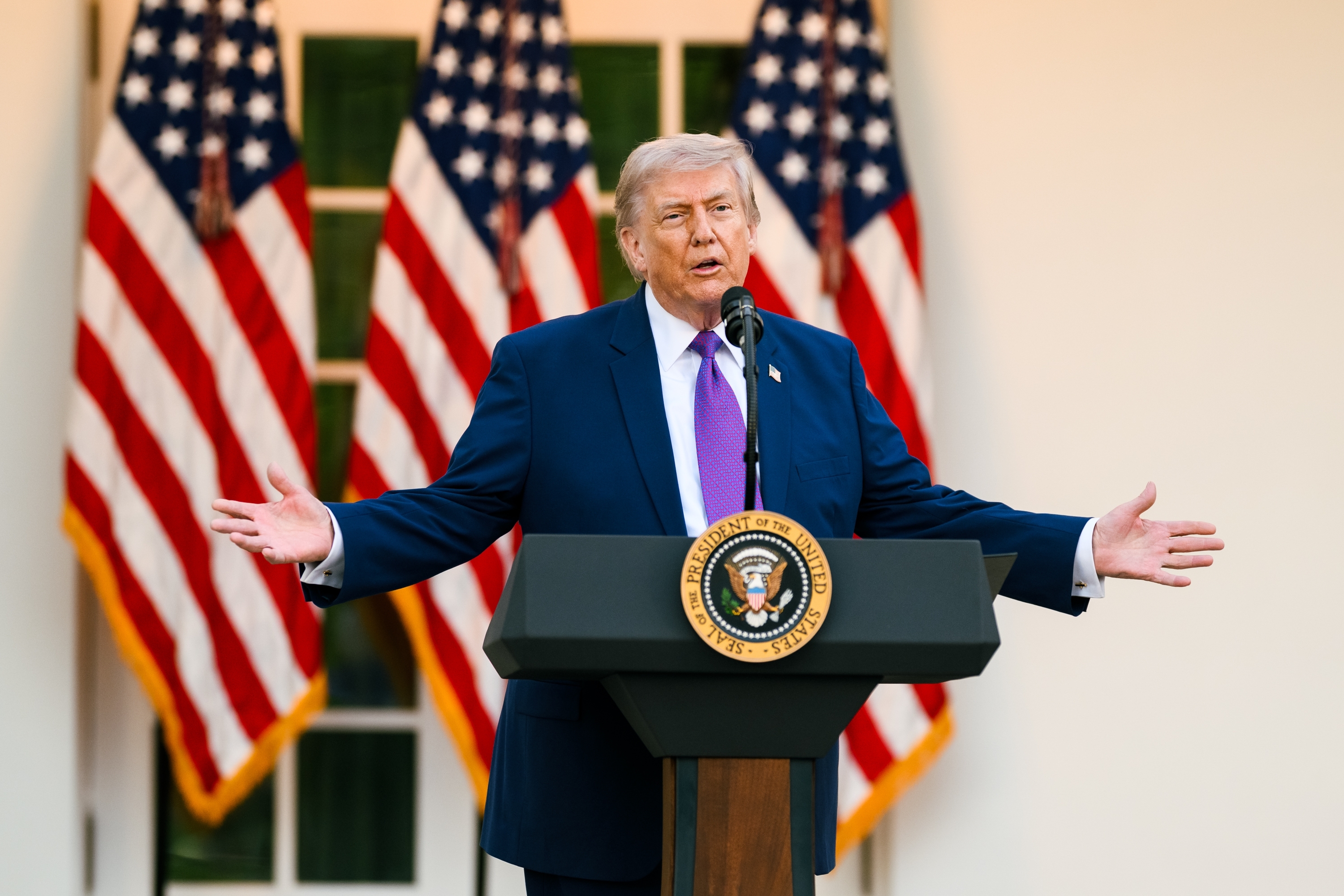
November 2026’s United States mid-term elections led to substantial defeats for the Republican Party that raise significant questions as to the future of its incumbent President Donald Trump, and his Make America Great Again (MAGA) coalition. In this blog Dr William Sheward, Senior Lecturer in Politics at the University of Winchester, outlines the results and what consequences may ensue for the final two-years of the Trump presidency, both at home and abroad, for domestic and foreign policy.
Mid-terms elections in the US are held at the halfway point of a four-year presidential term, and consist of the election of the entire two-year term 435 member House of Representatives, the lower chamber of the legislative body, the Congress, and approximately one-third of the 100 member upper chamber Senate, each elected for a six-year term. In addition, a wide range of state governors, 39 in this election cycle, were up for election in addition to legislatures in most states, together with an array of state referenda, initiatives and other ballot measures thus giving the electorate the opportunity to provide their say in what frequently amounts to a referendum on the incumbent presidential administration.
Following the 2024 elections, coterminous with the presidential election, the Republicans controlled the House of Representatives by 220 to 215 Democratic opposition seats, with 218 the number needed to run the lower House, and at 53-47 were in the majority in the Senate. Following the November 3 votes, Democrats had ‘flipped’ both chambers. At the latest count Democrats were clear winners at 54-44 seats in the Senate and 254-170 in the House of Representatives.
Democrats exceeded expectations with these numbers while they were beyond the worst fears of the Republicans as Democrats ran ahead of their most optimistic hopes and beyond the scale of what polling had indicated. For example, most notably Democrats won the Senate seat in Texas, last won by a Democrat in 1988, and, most remarkably, in the highly Republican seat in Kansas, last won by a Democrat in 1932. Democratic gains were noted in all regions of the country and where Republicans survived their margins of victory were sharply reduced.
Much is still to be adduced as to explanations of the results via examinations of each party’s campaign strategies and candidate quality as well as demographic and psephological shifts in the electorate but the immediate questions centre on what these outcomes portend for the remaining two years of the Trump presidency.
Of most import is that Trump is now, in the parlance of US politics, a ‘lame-duck’ president of steadily decreasing relevance as speculation will mount as to who the 2028 presidential contenders will be, beginning in the new year as a raft of potential candidates will announce their intentions to run for their prospective party’s nomination. For a person of Trump’s proclivity to always command the ‘centre stage’ of politics this will be a chastening experience.
Moreover, the loss of House and Senate precludes any iteration of a legislative and economic agenda as the Republicans are now in the minority. In addition, many in the Democratic Party, and especially the its core voters will demand to see Trump, certain family members and key figures in the Administration called to account via Congressional investigators armed with sub-poena powers on allegations of corruption, cronyism and aggrandisement in the first two years of his second term, and that such accountability needs to be exercised in order to draw a line on this aspect of the ‘Era of Trump.’
However, it would be a mistake to assume that a lame duck Trump is a neutered political figure. His political career underlines how much he welcomes a foil to oppose and to claim that there are outlandish forces out to get him. In the absence of touting a policy agenda, Trump will be happy to allow such Congressional, and media, inquiries that will confirm his continued relevance in political debates. He is, also, still a consequential constitutional figure, albeit in a negative fashion, given that he, as true for any president faced with his party in the minority, can wield his veto to thwart a Democratic policy agenda which he opposes by blocking legislation inimical to his and Republican interests, safe in the knowledge that, despite the Democrats successes they lack the two-thirds numbers in each chamber of Congress to overcome his veto.
Finally, and of, most likely, greater impact is that Trump remains Commander-in-Chief and has much greater leeway in the conduct of foreign policy than in the domestic arena, and, in keeping with his predecessors as they contemplate their political mortality, he can demonstrate, more than any other individual, the ability to materially impact foreign policy.
Given his attenuated position at home in the aftermath of the election where might he chose to demonstrate his relevance in foreign affairs? Several erstwhile unfinished and inconclusive issues may once again become salient and we do not know in what direction, for example, the war in Iran may take, or will he continue to side with Vladimir Putin at the expense of Ukraine in its war with Russia ? What might this mean for the UK, Europe and NATO as it recognises that it may be some time before it feels it can trust the US in security matters? Might we see a reprise of the actions taken against Nicolas Maduro of Venezuela only this time in Cuba?
This, together with any number of ‘unknown unknowns’ – the things we don’t know that we don’t know about – in other areas of the world, ensures that Trump remains a purposeful figure in his final years in office.
Back to media centre