
Dr Katy Soar, Senior Lecturer in Classical Archaeology at the University of Winchester, has published widely on archaeology, folk horror and the supernatural, including Circles of Stone and Strange Relics. As the nights draw in, Katy goes in search of prehistoric ghost stories and asks why there so few really ancients spirits…
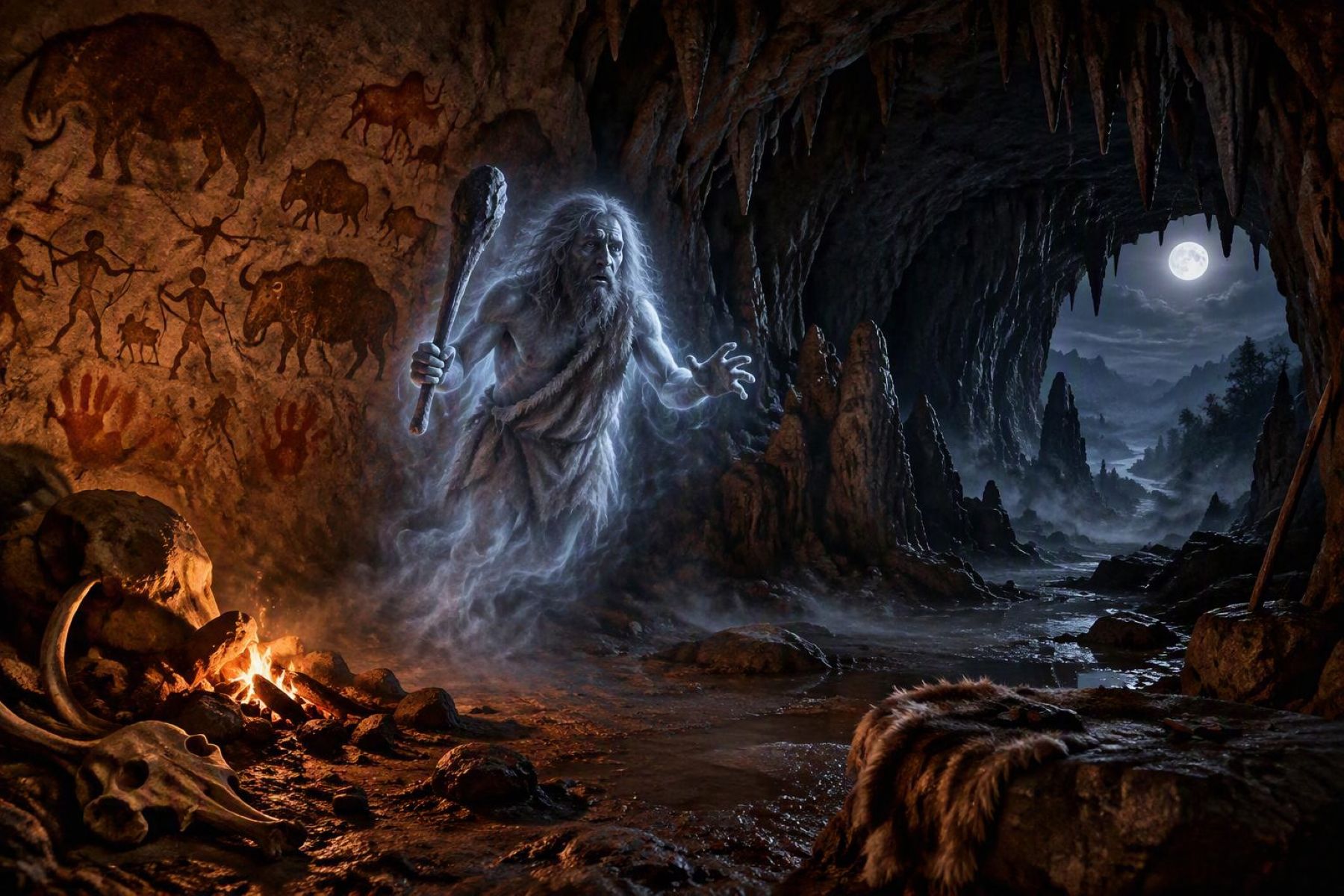
When we think of ‘traditional’ British ghosts, we tend to imagine white ladies, headless horsemen, or historical figures such as Anne Boleyn. But rarely do these ghosts go back more than a few hundred years. Given Britain’s strong tradition of ghost belief, it begs the question: where are the prehistoric ghosts?
In 1946, Sir Charles Oman claimed that he had “…never come across an apparition of a woad-painted Briton” (Oman 1946, 213). Prehistoric sites are certainly haunted, but their ghosts are not necessarily prehistoric. At Wandlebury Iron Age hillfort, for example, medieval tradition placed a spectral knight, while Bronze Age barrows at Barrowhills in Cornwall are haunted by a headless horseman. Nothing about either ghost identifies them as prehistoric.
There are exceptions. At West Kennet Long Barrow, a white-robed figure accompanied by a white dog with red ears supposedly appears at dawn on the summer solstice. A Bronze Age horseman was observed riding across Bottlebush Down in Dorset by the archaeologist Dr RC Clay in the winter of 1927, and who disappeared at the spot of a round barrow. We also hear ghostly tales of druids haunting prehistoric monuments, although these are particularly anachronistic - druids belong to the Iron Age, considerably later than the Neolithic and Bronze Age monuments they supposedly haunt.
Why so few prehistoric ghosts? One explanation might be the ‘stone tape’ theory, associated with archaeologist turned parapsychologist T. C. Lethbridge, in which intense experiences become impressed upon places and later ‘replayed’. Perhaps the physical remains associated with prehistoric people have simply disappeared, leaving no ‘recorder’. It may therefore be significant that apparent prehistoric ghosts tend to cluster around surviving monuments such as barrows.
Alternatively, perhaps ghosts simply fade away over time. Maybe they have a shelf life. Or if ghosts remain because of unfinished business or warnings, perhaps the concerns of prehistoric people no longer have any meaning for us.
Or we could think of ghosts in a different way, as a form of folklore. Ghost stories reflect the societies that tell them, their knowledge, values and expectations. In this sense, whether the ghost is actually ‘real’ is almost beside the point (Emmons 2003, 90). Ghost stories are as much about the living as the dead.
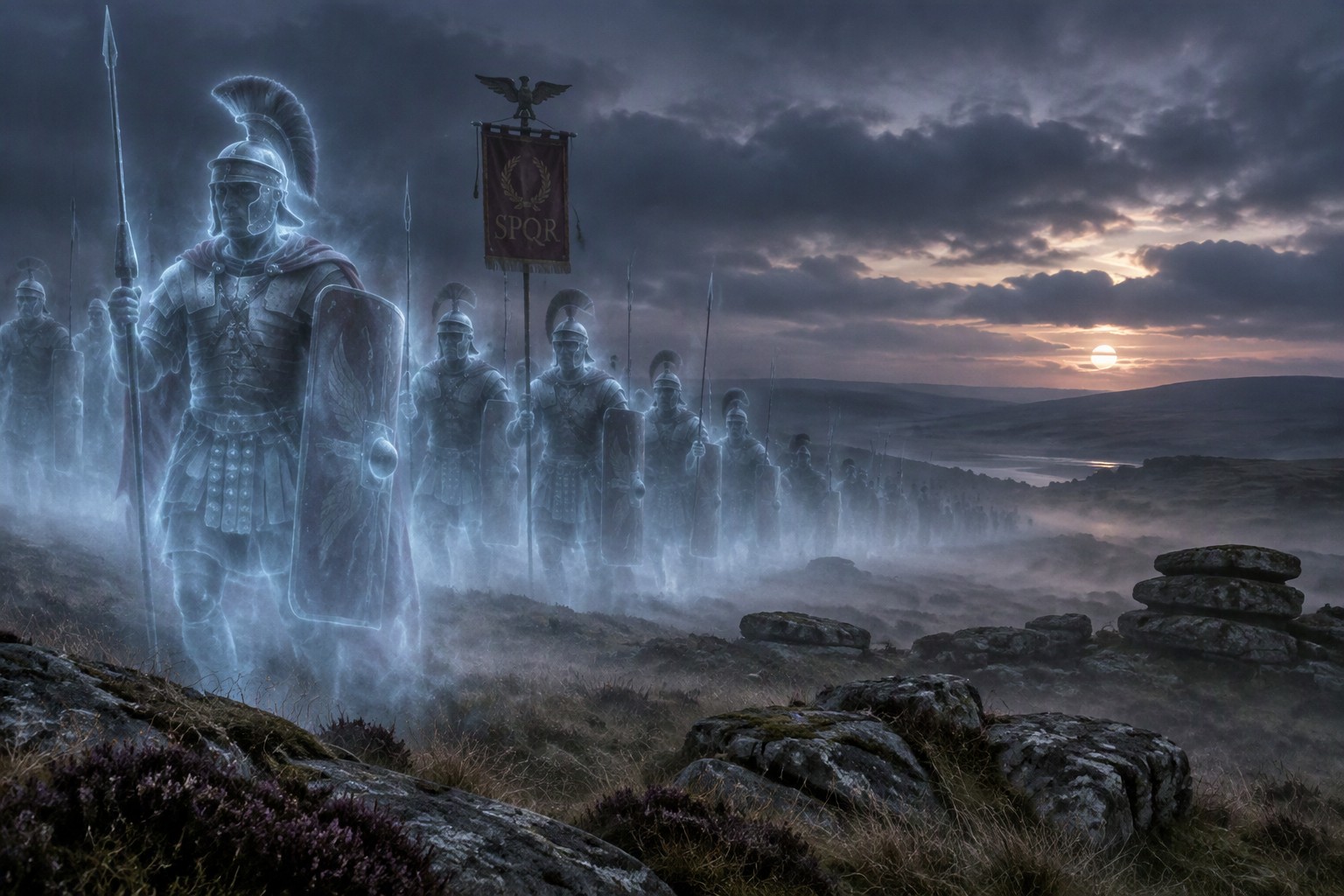
Take Roman ghosts. These are are known from across the country, with perhaps the most famous being the ghostly Roman legion which marched through the basement of the Treasurer’s House in York, much to the shock of 18 year old plumber Harry Martindale who was working there at the time. But these appear surprisingly late in recorded folklore. Jeremy Harte notes that they emerge largely in the twentieth century and are conspicuously absent from the nineteenth century, when “ghosts were being recorded as never before” (1986, 34). Owen Davies similarly found no reports earlier than 1904 (2007, 42).
Why did Roman ghosts suddenly appear? As Simpson and Roud argue, communal traditions shape our expectations of what ghosts should look like (2000, 142). During the twentieth century, Romans became increasingly familiar through education and popular culture. As Harte puts it, people cannot see Romans until they have learned about them. Significantly, Roman ghosts are overwhelmingly soldiers rather than shopkeepers, farmers or merchants. They resemble the Romans popular culture has taught us to expect.
This may explain the scarcity of prehistoric ghosts. Prehistoric Britons remain much less familiar. Stonehenge may be instantly recognisable, but the people who inhabited prehistoric Britain are harder for most of us to imagine. Perhaps tellingly, one of the rare specifically Bronze Age ghosts was identified by an archaeologist.
The supposedly prehistoric druids tell us something similar. Prehistoric monuments were popularly associated with druids for centuries, long after scholars recognised that many of them predated the druids by millennia. The ghosts therefore reflect popular ideas about prehistory rather than archaeological reality.
Which is why Prof. Kenny Brophy of the University of Glasgow and myself are researching the phenomenon (or lack thereof) of prehistoric ghosts. We want to examine and contextualise reported sightings of pre-Roman ghosts in the UK (and also reports of ghosts at prehistoric sites) to gain an understanding of how and why they appear. To do this, we first need to develop a data set of ghost hauntings. One way of collecting this data is by asking the public for any prehistoric ghost stories they may have. So I turn this over to you: do you have a prehistoric ghost story? Have you or anyone you know seen the ghost of a pre-Roman person in the UK? Or have you had a ghostly experience at a prehistoric site? If you have, please send me an email at katy.soar@winchester.ac.uk. We’d love to hear from you!
And who knows? If prehistoric peoples become more visible in popular culture (think of Rogh in the BBC series Ghosts), they may begin to appear more frequently. If we have to learn what a ghost looks like before we can see it, perhaps Britain’s prehistoric dead may yet start walking the landscape again.
A fuller version of this post is published in the British Fantasy Society Journal #29 Winter 2026.
References:
Owen Davies, 2007. The Haunted: A Social History of Ghosts. Basingstoke: Palgrave MacMillan
Charles F. Emmons, 2003. Ghosts: The Dead Among Us, in Clifton D. Bryant (ed.) The Handbook of Death and Dying. Volume Two, The Presence of Death. London: Sage Publications, 87-95
Jeremy Harte, 1986. Cuckoo Pounds and Singing Barrows. The Folklore of Ancient Dorset. Dorchester: Dorset Natural History and Archaeological Society
Charles Oman, 1946. The Old Oxford Phasmatological Society, Journal of the Society for Psychical Research 33, 208-216
Jacqueline Simpson and Steve Roud, 2000. A Dictionary of English Folklore. Oxford: Oxford University Press
Back to media centre