
Movement Capture & Analysis of Technique in Sport
Apply online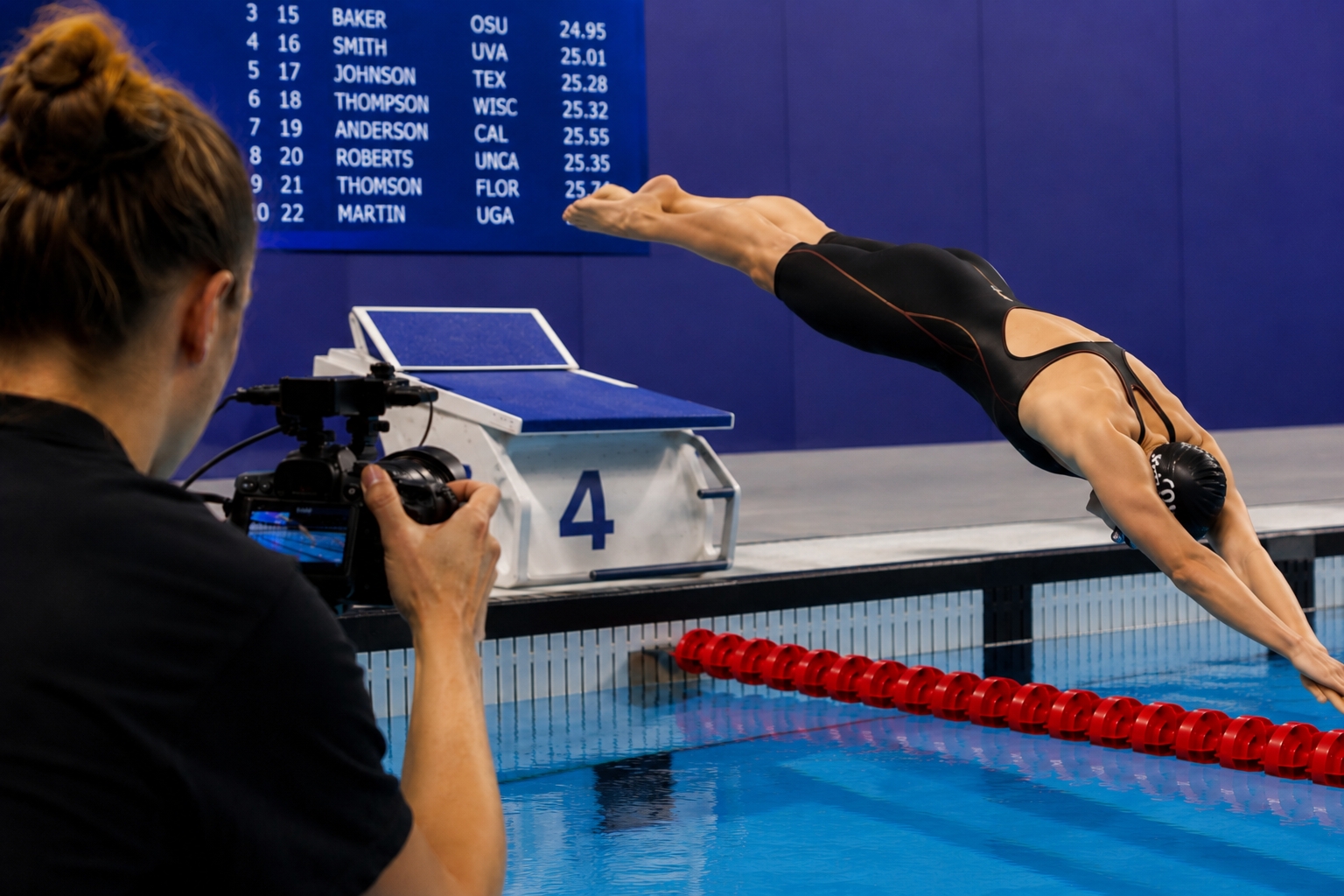
Course overview
This course will provide key information on how to undertake video analyses for capturing athletes' technique when performing sports-based movements. Mobile technology has made it easier than ever to record and provide feedback to athletes on their actions. This course will cover essential information on how to get high quality recordings from all types of cameras, and how the videos can be used to track athletes' progress.
The course is aimed at sports coaches, strength and conditioning coaches, performance analysts, and sports therapists.
The course will be run by Dr David Jessop, Senior Lecturer in Sport and Exercise Biomechanics who has 20 years' experience working as a lecturer in biomechanics, consulting with elite athletes, teams and businesses, and researching in sports including sprinting, racket sports, and diving.
The course will be delivered on-line through a variety of on-line seminars, recorded content, on-line learning tools, and practical activities.
What you need to know
Course start date
September 2026
Location
UOW & online
Course length
10-12 hours over 7 weeks
Apply
Apply online
Typical offer
Fees
£250 (50% discount for September 2026 course)
Course features
- How to undertake simple biomechanical analysis
- Setting up an area and client for analysis
- Set up and filming people performing sporting and other movements
- Use basic software for quantitative biomechanical analyses
- Support for undertaking your own analyses
Course details
Location
Distance learning only.
Learning and teaching
This is a 7 week course facilitated and taught by Dr David Jessop. The course involves 7 online sessions (across the length of the course) plus teaching delivered via Canvas.
This distance-learning course is delivered via Canvas. Due to government regulations, Instructure (Canvas) prohibits the unauthorised use of its products and services in specific countries and regions. We need to make these restrictions clear to individuals considering this course. Please see the guidance as documented by Canvas.
Which countries are restricted from using Canvas?
This course uses the video hosting platform Vimeo, which the following countries have restricted access. China (excluding Hong Kong), North Korea, Iran, Cuba, Indonesia, Sudan, Syria, and Russia.
For more information regarding these restrictions please email HWBShortcourses@winchester.ac.uk before booking a place on the course.
This course requires access to Microsoft Teams and the following Operating System
For course software:
Operating System: Windows 7 to 11 with .NET Framework 4.8.
CPU: Intel or AMD, 64-bit (x86-64).
Screen resolution: 1024 × 600 pixels.
Mac: it will not work on Mac computers with ARM-based “Apple Silicon” chips (M1, M2, etc.), even through Parallels Desktop or virtualization.
Do not run the application directly from a OneDrive synchronized directory.
Modules
Please note the modules listed are correct at the time of publishing. The University cannot guarantee the availability of all modules listed and modules may be subject to change. The University will notify applicants of any changes made to the core modules listed. For further information please refer to winchester.ac.uk/termsandconditions
Modules
Entry requirements
There are no formal entry requirements. It would help learners if they are involved directly in working (or volunteering) with populations, e.g. athletes or people undergoing rehabilitation following injury, where there is an interest in how they move or perform certain actions.
For general enquiries or to book your place, please contact the department administrator HWBShortCourses@winchester.ac.uk
There are no formal entry requirements. It would help learners if they are involved directly in working (or volunteering) with populations, e.g. athletes or people undergoing rehabilitation following injury, where there is an interest in how they move or perform certain actions.
Additional costs
For information about staff and student discounts please contact the short course administrator HWBShortCourses@winchester.ac.uk.